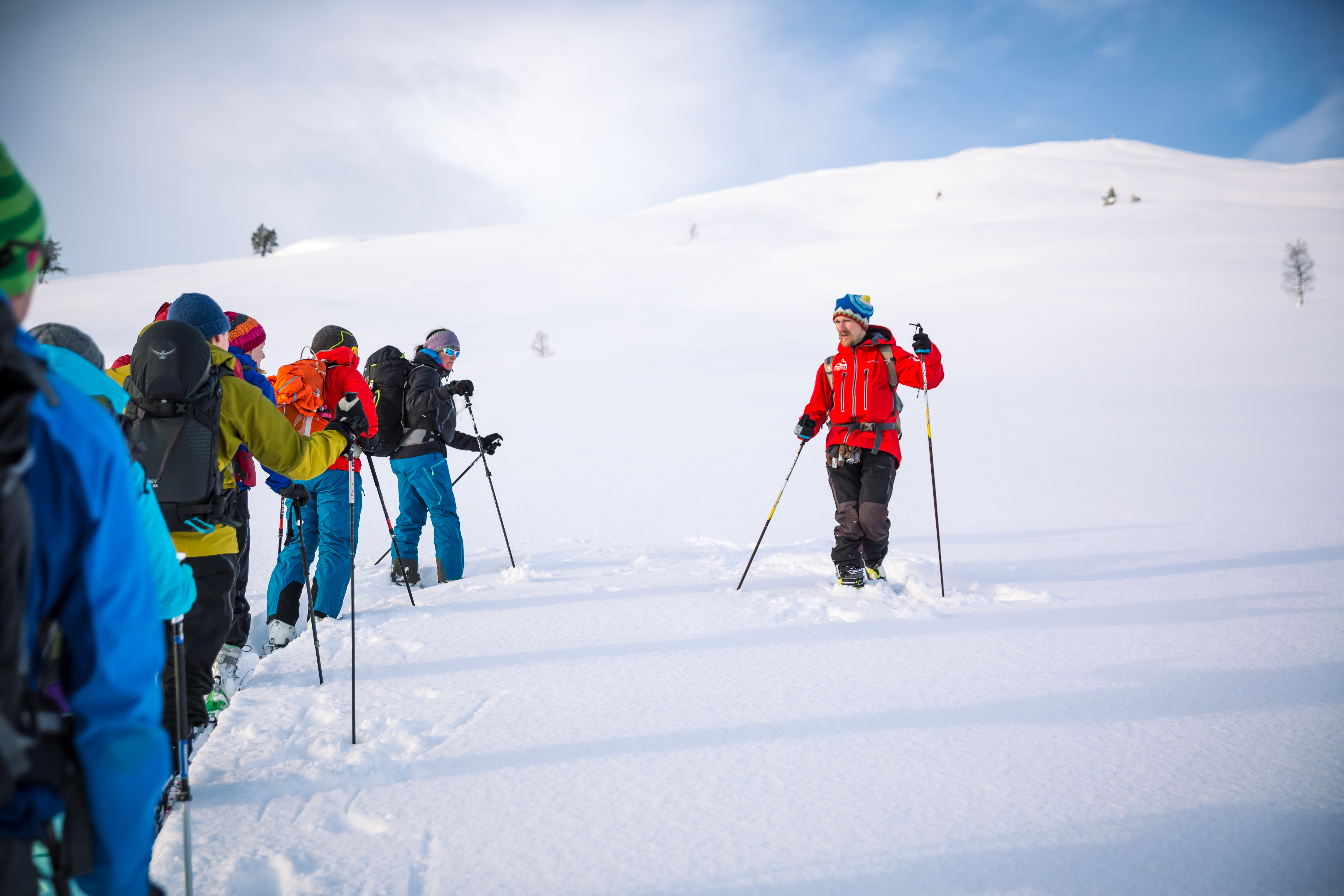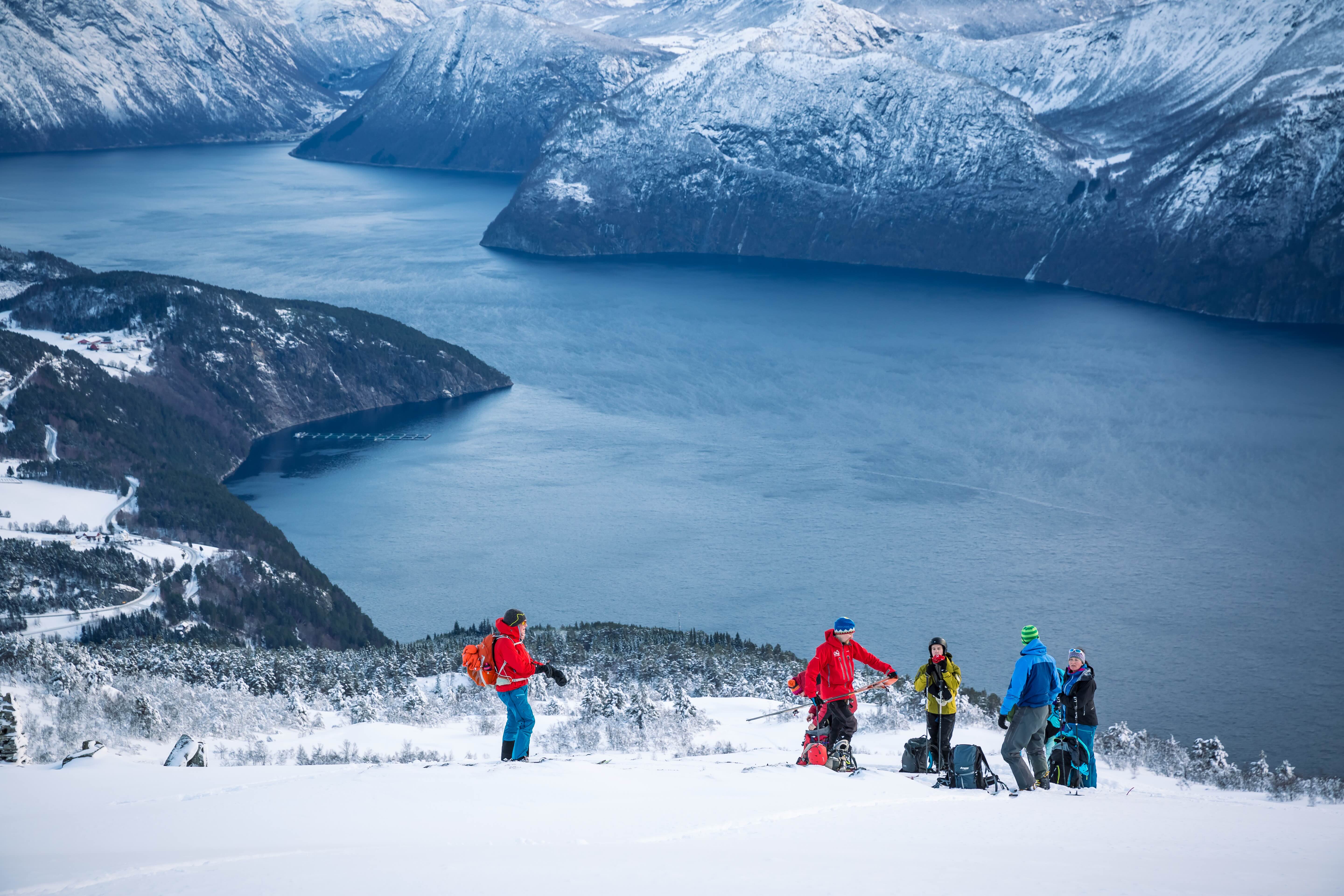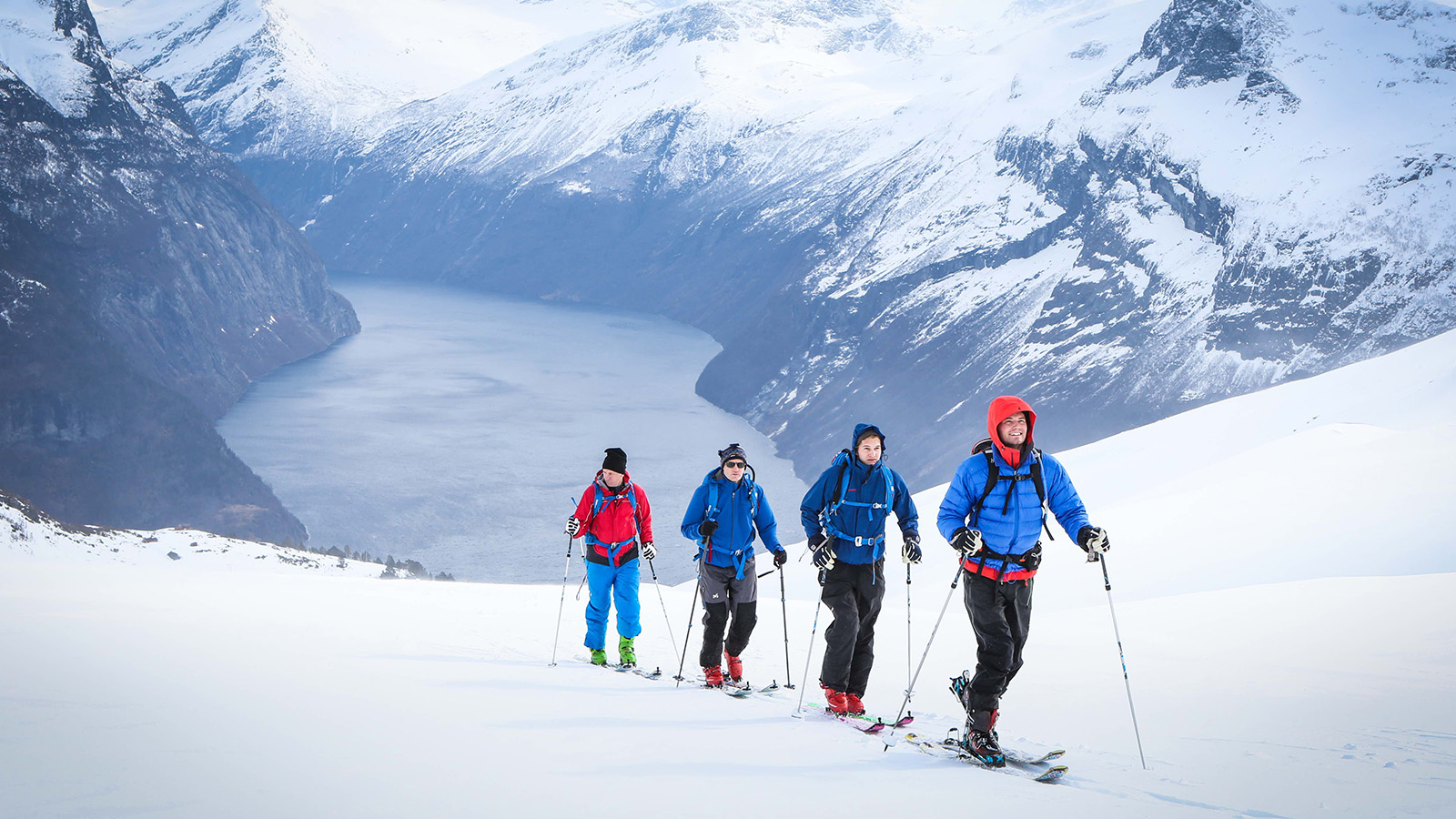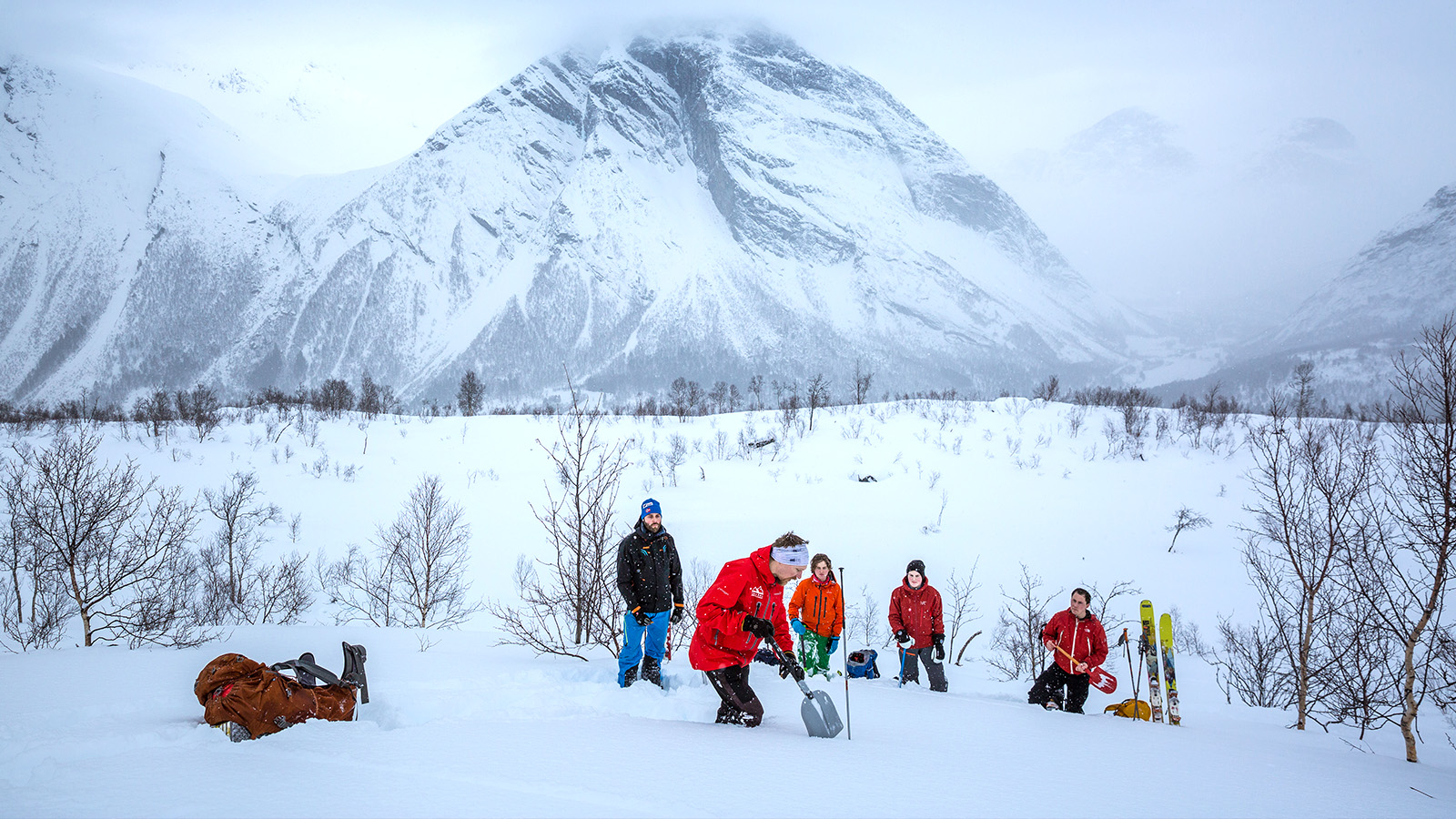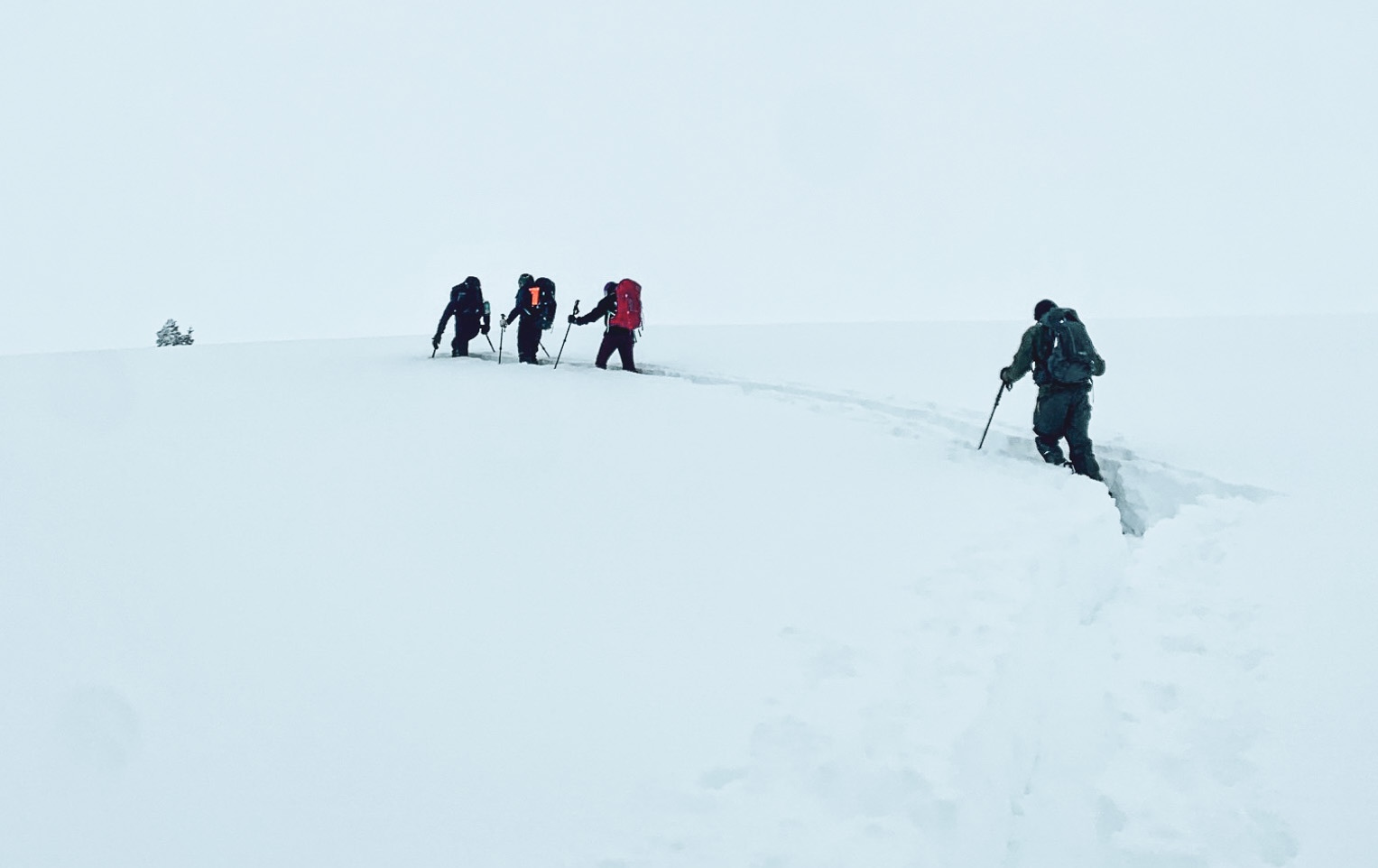
You can take an avalanche course in English in Norway with Uteguiden, which runs English-language courses in Stranda (Sunnmøre Alps, Western Norway) and Hemsedal (Hallingdal, between Oslo and Bergen). Choose a basic avalanche course if you are new to off-piste or ski touring, or an advanced course if you already travel in avalanche terrain. Both teach you to read the Norwegian forecast, plan routes and carry out a companion rescue.
Why take an avalanche course in Norway?
Norway's ski touring and freeride season draws skiers from all over the world, and much of the best terrain is steep, open and far from patrolled pistes. The snowpack is shaped by coastal storms, strong winds and rapid temperature changes, so conditions can vary a lot between the coast and inland valleys, and from one day to the next. A good avalanche course gives you a structured way to make decisions in that terrain instead of relying on luck or simply following other tracks.
If Norwegian is not your first language, taking the course in English matters. Avalanche education is full of precise concepts such as avalanche problems, terrain traps and weak layers, and you want to understand every word when you practise a rescue under time pressure.
Where can you take an avalanche course in English?
Uteguiden holds avalanche courses in English in two Norwegian ski areas with very different characters:
- Stranda (Sunnmøre, Western Norway): a small fjord village known for powder skiing and outdoor culture, with the Stranda ski resort as a base and the Sunnmøre Alps rising straight out of the fjords. Read more about the area on our Stranda page.
- Hemsedal (Hallingdal, Eastern Norway): a well-known ski destination roughly between Oslo and Bergen, with a more inland climate and plenty of accessible terrain around the resort.
Training in both a coastal and an inland snow climate is a useful way to see how the same principles apply in different conditions. You can see all our avalanche courses on the avalanche course overview.
Basic vs. advanced: which course do you need?
Basic avalanche course
A basic course is for skiers, splitboarders and snowshoers who want to start travelling in avalanche terrain, or who have done some off-piste skiing but never had formal training. Typical topics include:
- How avalanches form and the main avalanche types
- Reading the daily avalanche forecast and the five-level danger scale
- Recognising avalanche terrain: slope angle, aspect, terrain traps and run-out zones
- Simple decision-making tools for planning and on the day
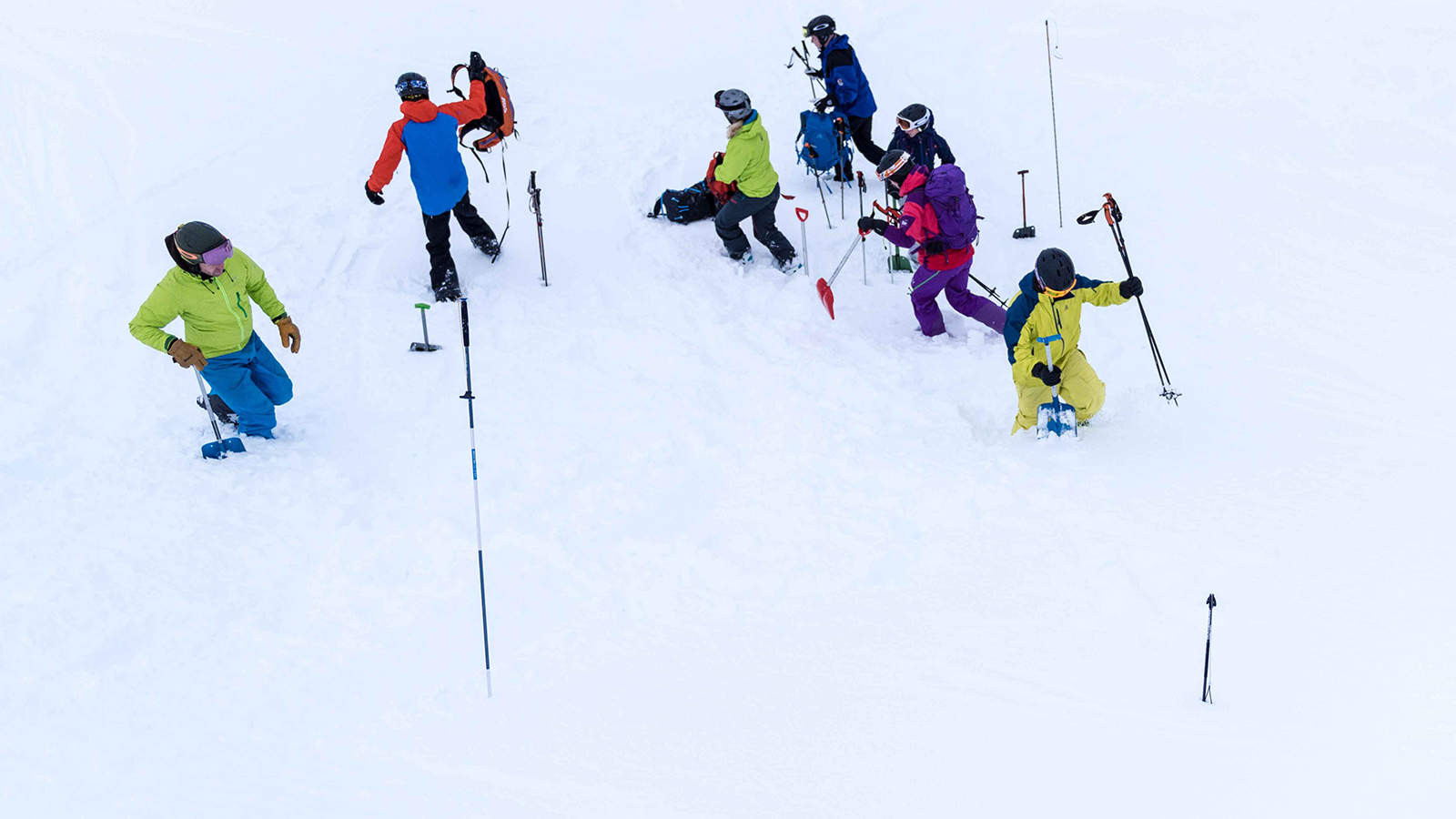
- Companion rescue: transceiver search, probing and strategic shovelling
In Hemsedal, our Basic Avalanche Course Hemsedal is the natural starting point.
Advanced avalanche course
An advanced course is for people who already have a basic course behind them and some seasons of touring or freeriding. The focus moves from learning concepts to applying them: assessing the snowpack in more depth, choosing routes in complex terrain, managing a group, and running more realistic rescue scenarios, including multiple burials.
We run advanced courses in both locations: Advanced Avalanche Course Stranda and Advanced Avalanche Course Hemsedal.
How avalanche forecasting works in Norway
Norway's public avalanche forecasts are published on Varsom, run by the Norwegian Water Resources and Energy Directorate (NVE). The forecasts are available in English and use the European five-level danger scale. Each forecast also describes the main avalanche problems for the region, for example wind slabs, new snow, persistent weak layers or wet snow, along with which aspects and elevations are most affected.
A key skill on any course is turning that forecast into a real plan: which slopes to avoid, which to ski with care, and where you might be comfortable. Your instructor will show you how to do this for the region you are in, and how to update your plan with what you observe in the field.
What to bring
Every person travelling in avalanche terrain needs three pieces of rescue equipment:
- An avalanche transceiver (beacon)
- An avalanche probe
- A metal-bladed avalanche shovel
You will also need equipment for moving in the mountains, such as touring skis or a splitboard with skins, or freeride skis if the course is based around lift access, plus a backpack large enough to carry your rescue kit, warm layers and food. If you do not own avalanche equipment, Uteguiden offers gear rental that includes avalanche equipment. Check the course page for exact requirements before you travel.
For clothing, plan for cold and changeable weather: a windproof and waterproof shell, insulating wool or fleece layers, a warm hat, gloves and spare gloves, goggles and sun protection.
How to choose a course
When comparing avalanche courses in Norway, ask:
- Is it taught fully in English? Confirm before booking.
- Who are the instructors? Look for certified guides with local experience of the area.
- How much time is spent in the field? Practical skills improve outdoors, not in a classroom.
- How large is the group? Smaller groups mean more feedback and more hands-on rescue practice.
- Does it fit your level? A basic course for beginners, an advanced course for experienced tourers.