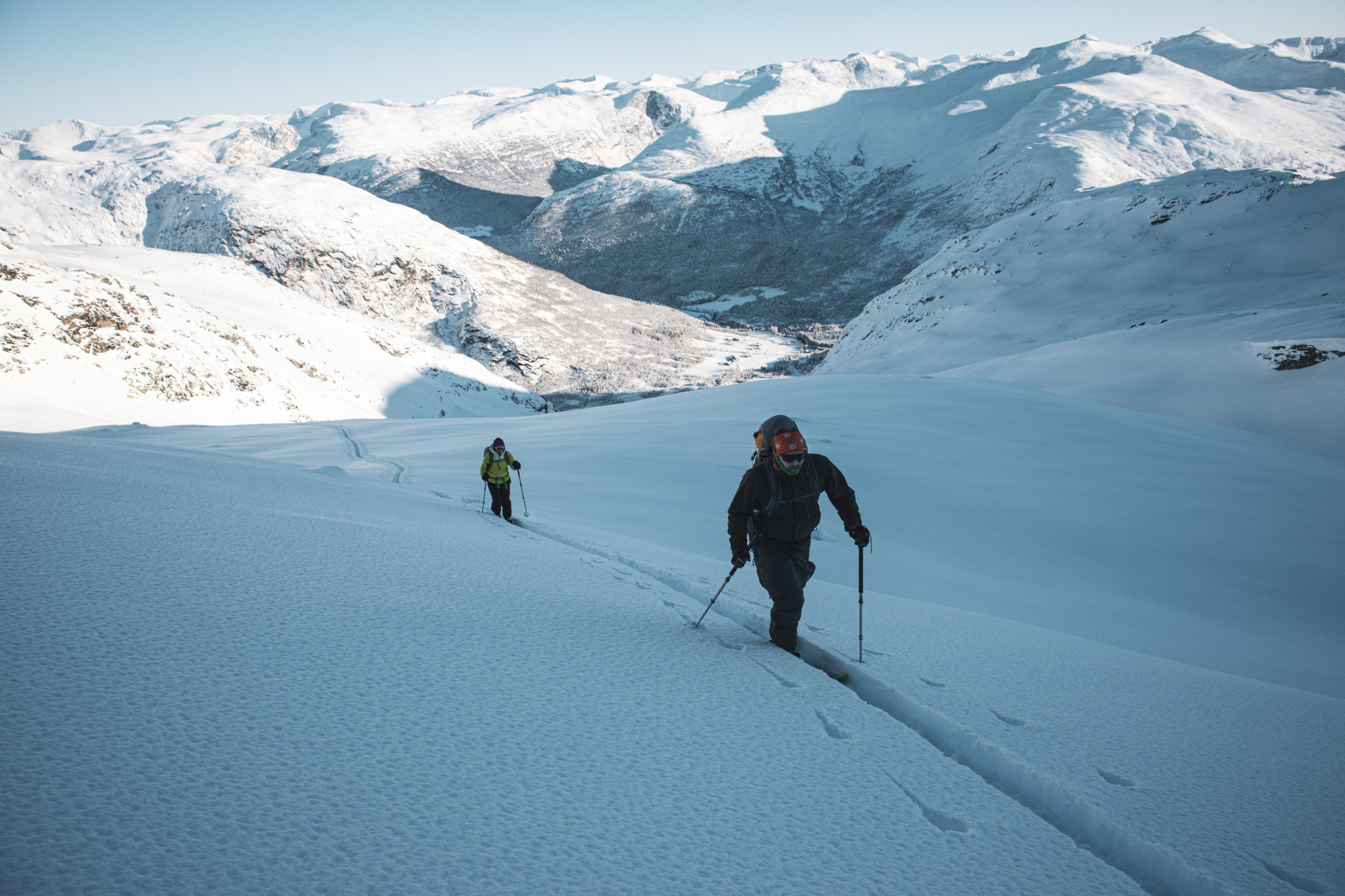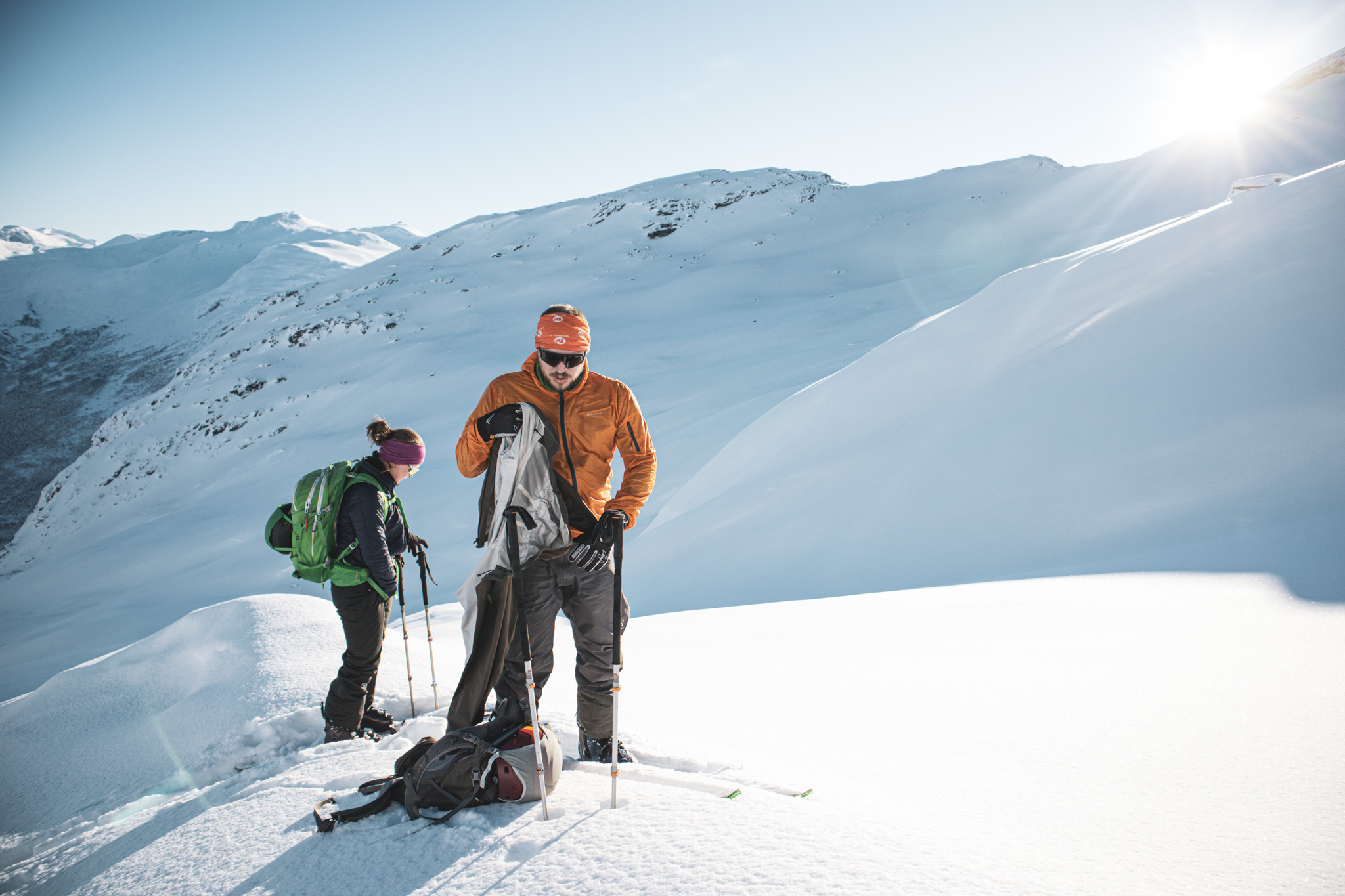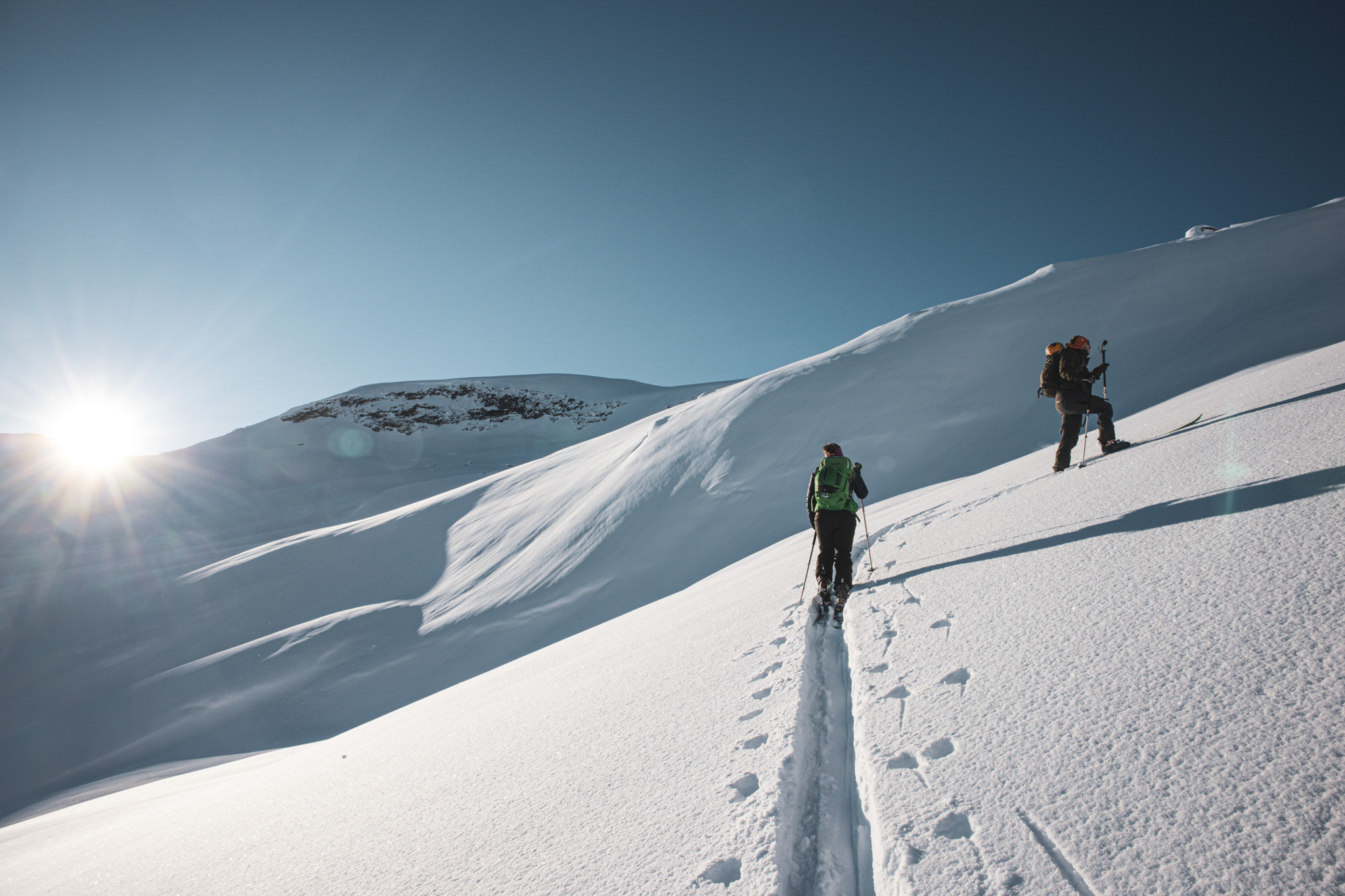
Slogen (1,564 m) is a demanding ski tour above Hjørundfjorden in the Sunnmøre Alps, Western Norway. You start in the village of Øye, almost at sea level, so you face around 1,500 vertical metres. The route climbs past the Patchell hut to a steep summit area, where many people walk the final metres on foot. It suits experienced ski tourers with solid avalanche skills. Spring and early summer usually offer the most stable snow. If in doubt, go with a guide.
Slogen as a ski tour: the essentials
Slogen is one of the best-known peaks in the Sunnmøre Alps, the steep coastal mountains south of Ålesund in Western Norway. Its pointed summit towers over Øye and Norangsfjorden at the far end of Hjørundfjorden, a quiet, dramatic fjord well off the main tourist routes. In summer the mountain is a popular hiking objective. In winter and spring it becomes a long, alpine ski tour with a big height difference, steep sections and an airy summit area. You start at the fjord and finish with views over fjords and peaks in every direction – the main reason so many skiers put Slogen on their list.
Want to ski Slogen or other peaks around Hjørundfjorden with local, certified guides? See Ski touring around Hjørundfjorden. If you have more time, the Ski touring week in the Sunnmøre Alps gives you more days in the mountains, with the guide choosing objectives based on conditions and weather.
Key facts: vertical, time and requirements
- Summit: Slogen, 1,564 m above sea level
- Start: Øye, at the head of Norangsfjorden, almost at sea level
- Vertical gain: around 1,500 m
- Time: plan for a full day. It depends on fitness, snow conditions and how much of the summit you climb on foot.
- Difficulty: demanding. The route has steep slopes, exposed sections and a summit area that often requires crampons and an ice axe.
- Who it suits: experienced ski tourers who are comfortable in steep terrain, can assess avalanche danger and are fit for long days
The route from Øye
From the fjord to the Patchell hut
The tour starts in Øye. The first section mostly follows the summer trail up the hillside towards Patchellhytta (the Patchell hut). Down low there can be little snow early and late in the season, so many people have to carry their skis for a while before they can put on skins. The climb is steady and noticeable from the start, so keep a calm pace – there are plenty of vertical metres still to go.
From the hut towards the summit area
Above the Patchell hut the terrain opens up and you skin up the mountainside towards the top. The slopes get steeper here and your choice of track becomes critical. Keep spacing between group members, avoid stopping in the middle of slopes and read the terrain continuously. Watch for cornices, wind-transported snow and pockets of loose snow.
The final metres to the top
The uppermost section is steep and exposed. Many leave their skis at a ski depot and continue on foot. If the snow is hard or icy you need crampons and an ice axe – and you must know how to use them. Ask yourself whether the summit is worth it on the day. Turning around at the ski depot is still a great tour.
The descent
The descent roughly follows the ascent route, with long, steep turns and the fjord below you. Snow can vary a lot from summit to sea: hard crust at the top, perfect corn snow mid-mountain and rotten spring snow near the bottom. Timing is the key to a good descent.
Avalanche risk on Slogen
Slogen is avalanche terrain all the way from the slopes above Øye to the summit. Several slopes sit at an angle where avalanches release easily, and much of the tour crosses terrain with run-out zones below you. That calls for careful planning and continuous assessment along the way.
- Check varsom.no, the official Norwegian avalanche forecast, for the Sunnmøre region before you go. Read the avalanche problems, not just the danger level.
- Spring snow and the daily cycle: in spring the risk of wet avalanches increases through the day as the sun warms the snow. Start early and be out of the steepest slopes before the snow turns rotten.
- Wind: new snow and wind create wind slabs on lee slopes and below ridges. Be extra sceptical after snowfall.
- Cornices and the summit area: keep a good distance from cornice edges.
- Equipment: avalanche transceiver, shovel and probe are the minimum, and you must have practised companion rescue.
If you are unsure of your own judgement, an avalanche course is a good investment. We run avalanche courses at several levels. To practise steep terrain, track setting and technique, take a look at the basic ski touring course in Stranda.