




Sunnmøre in Western Norway is one of the country's best regions for trad and multipitch climbing. Solid gneiss walls, long ridges and alpine peaks rise straight from the fjords, and most routes are protected with your own nuts and cams. The main season is summer. If you are new to trad, start with a guided course or a private climbing guide.
A guide to multipitch climbing in Norway
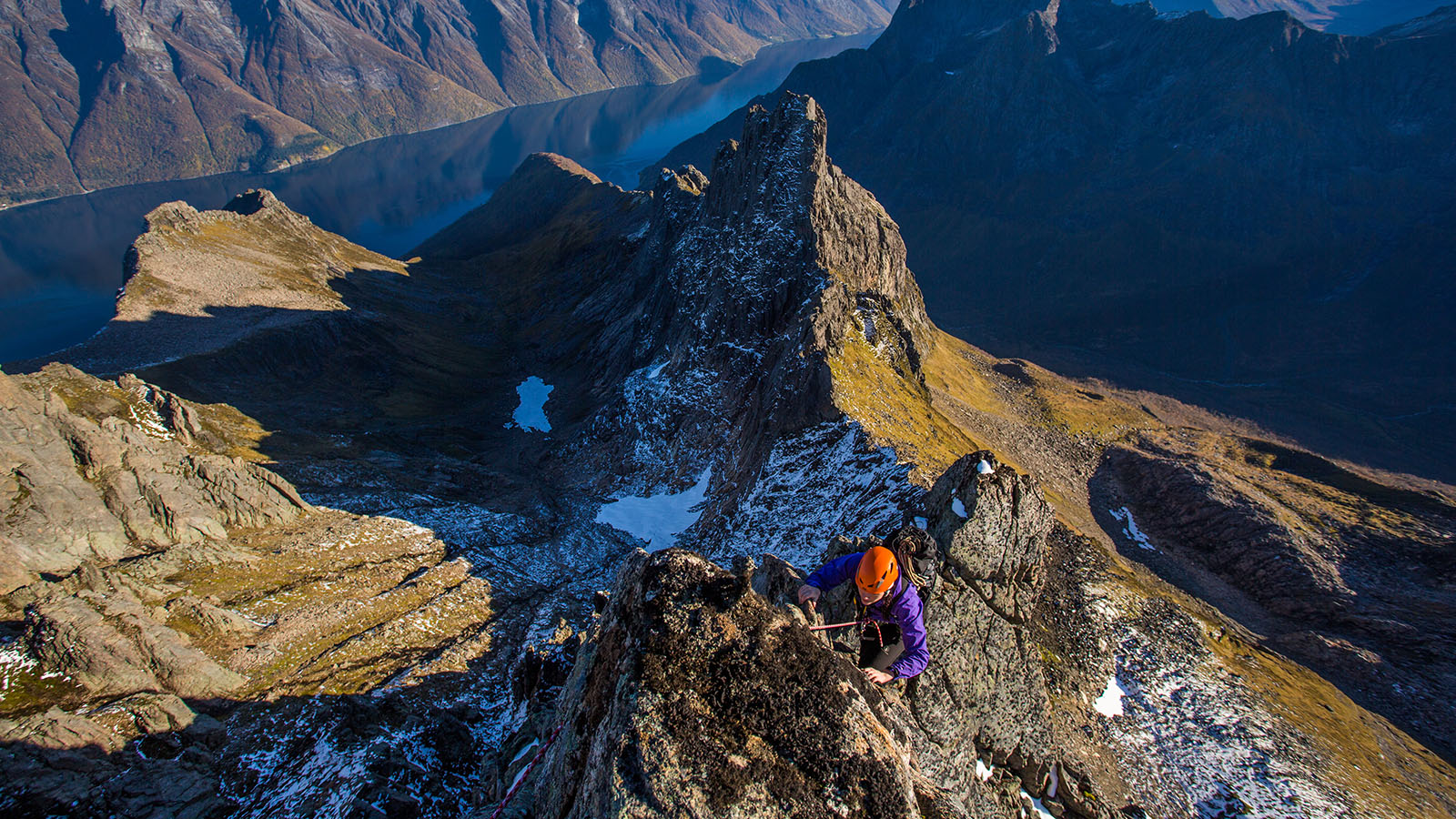
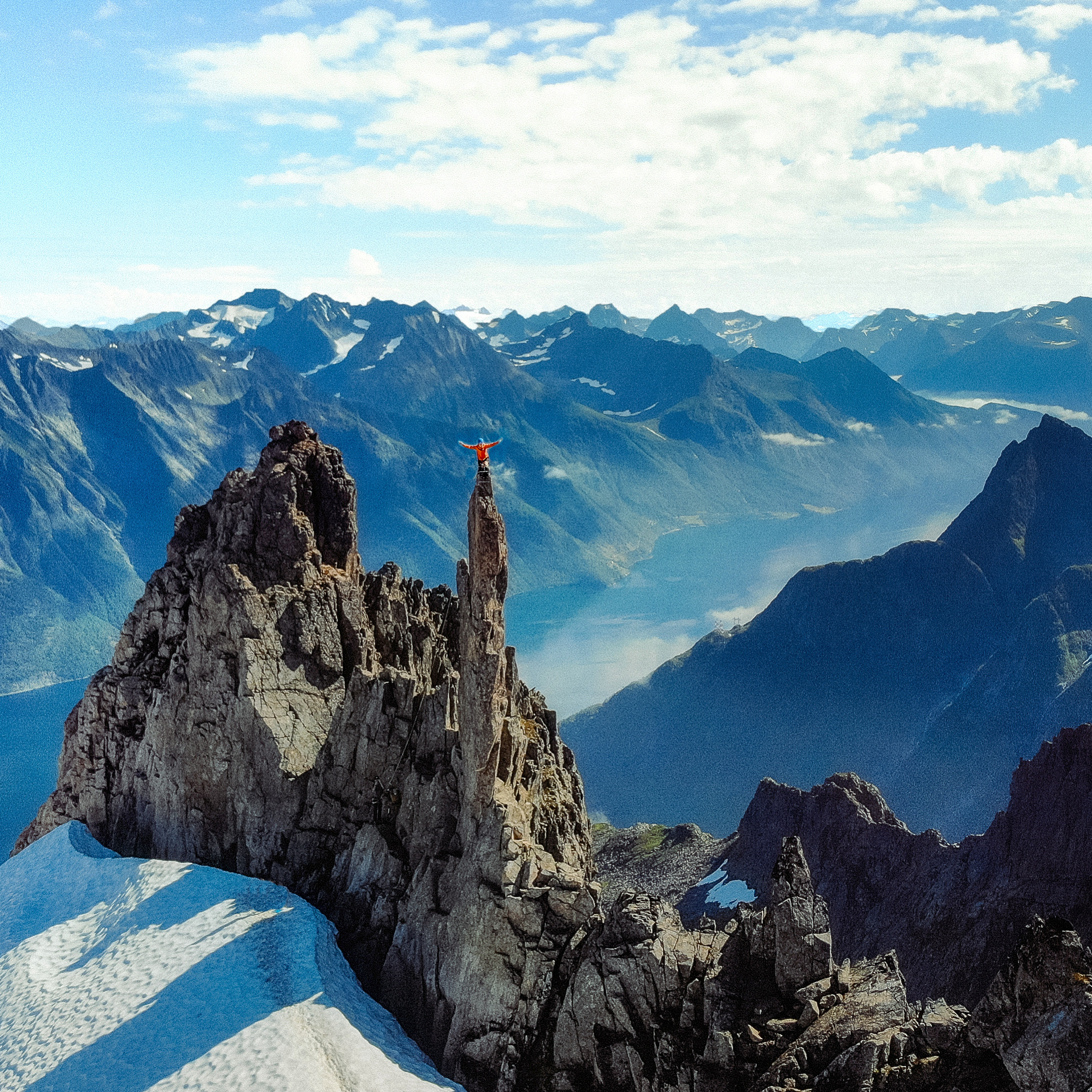
Sunnmøre is one of the best regions in Norway for trad climbing and multipitch climbing. Steep walls, long ridges and alpine peaks rise almost straight out of the fjords, and the terrain is ideal for climbing on traditional protection. The region has a long mountaineering and climbing history, and many of its classic lines are still climbed much as they were by the first ascensionists. Today Sunnmøre and neighbouring Romsdalen draw climbers from all over Europe who want long, adventurous days on rock with fjord views below.
This guide explains what trad and multipitch climbing involve, what makes the area special, which skills you need, and how to get started safely, whether you want to learn the basics or tick off a classic summit.
What is trad climbing?
Trad (traditional) climbing means placing your own protection while you climb and removing it again as the second climber follows. Instead of clipping pre-placed bolts, the leader finds cracks and features in the rock and protects the route as they go.
Typical protection includes:
- nuts (wedges or stoppers)
- cams (spring-loaded camming devices)
- slings and quickdraws for natural features such as horns and blocks
Unlike sport climbing, most mountain routes in the region have few or no fixed bolts. Some routes may have occasional fixed gear or bolted anchors, but you should never rely on it. Always assume you need to protect the route and build anchors yourself, and check a current guidebook or local guide for the route you plan to climb.
Why climb on Sunnmøre?
Sunnmøre combines a few things that are hard to find in one place:
- Big terrain close to the sea. The Sunnmøre Alps rise dramatically from fjords such as Hjørundfjorden and Storfjorden, so you can start a climb near sea level and finish on a summit with views over the fjords.
- Good rock. Much of the climbing is on gneiss, which offers cracks, slabs and ridges suited to traditional protection.
- Variety. You can choose short multipitch routes at valley crags, long ridge traverses or full alpine days on classic peaks.
- Long summer days. In the middle of summer it stays light late into the evening, which gives more margin on long routes.
- Quiet mountains. Outside the most famous peaks, you will often have the route to yourself.
Romsdalen, just north-east of Sunnmøre around Åndalsnes, adds some of Norway's most famous big walls and peaks. Many climbers combine the two areas on the same trip. For a broader overview of sport, bouldering and trad options near Ålesund, read our guide to climbing on Sunnmøre.
When is the trad climbing season?
The main season for rock climbing on Sunnmøre is summer, when the snow has melted from approaches and the rock is dry. Lower crags often come into condition earlier than high alpine routes, and north-facing or high routes can hold snow well into the summer. Weather in Western Norway changes quickly, so plan with buffer days and always check the forecast before committing to a long route.
If you want to climb in winter conditions, take a look at our winter alpine climbing experience.
Multipitch climbing
Many routes in Sunnmøre consist of several pitches. On a multipitch route the team climbs one rope length at a time, builds an anchor, brings up the second climber and then continues. Ridges and alpine routes often mix roped pitches with easier scrambling where the team moves together.
Multipitch climbing requires knowledge of:
- anchor building on natural protection
- rope systems (single, half or twin ropes) and belaying from the top
- rappelling and safe descents
- route planning, time management and turning points
- communication when you cannot see or hear your partner
- basic self-rescue and partner rescue
On longer routes the descent can be as serious as the climb. Many classic routes in the region involve rappels or long walk-offs on loose or exposed ground, so route finding and good judgement matter just as much as climbing grade.
Gear for trad and multipitch climbing
A typical trad rack for the region includes a set of nuts, a set of cams in common sizes, slings, quickdraws or alpine draws, and locking carabiners for anchors. In addition you need a harness, helmet, belay device suitable for belaying from above, approach shoes or boots, and layers for changing weather. The exact rack depends on the route, so check the guidebook or ask a local guide before you go.
On guided trips, your guide will advise on what to bring. Read more about how we work on our safety page.
Learning trad climbing
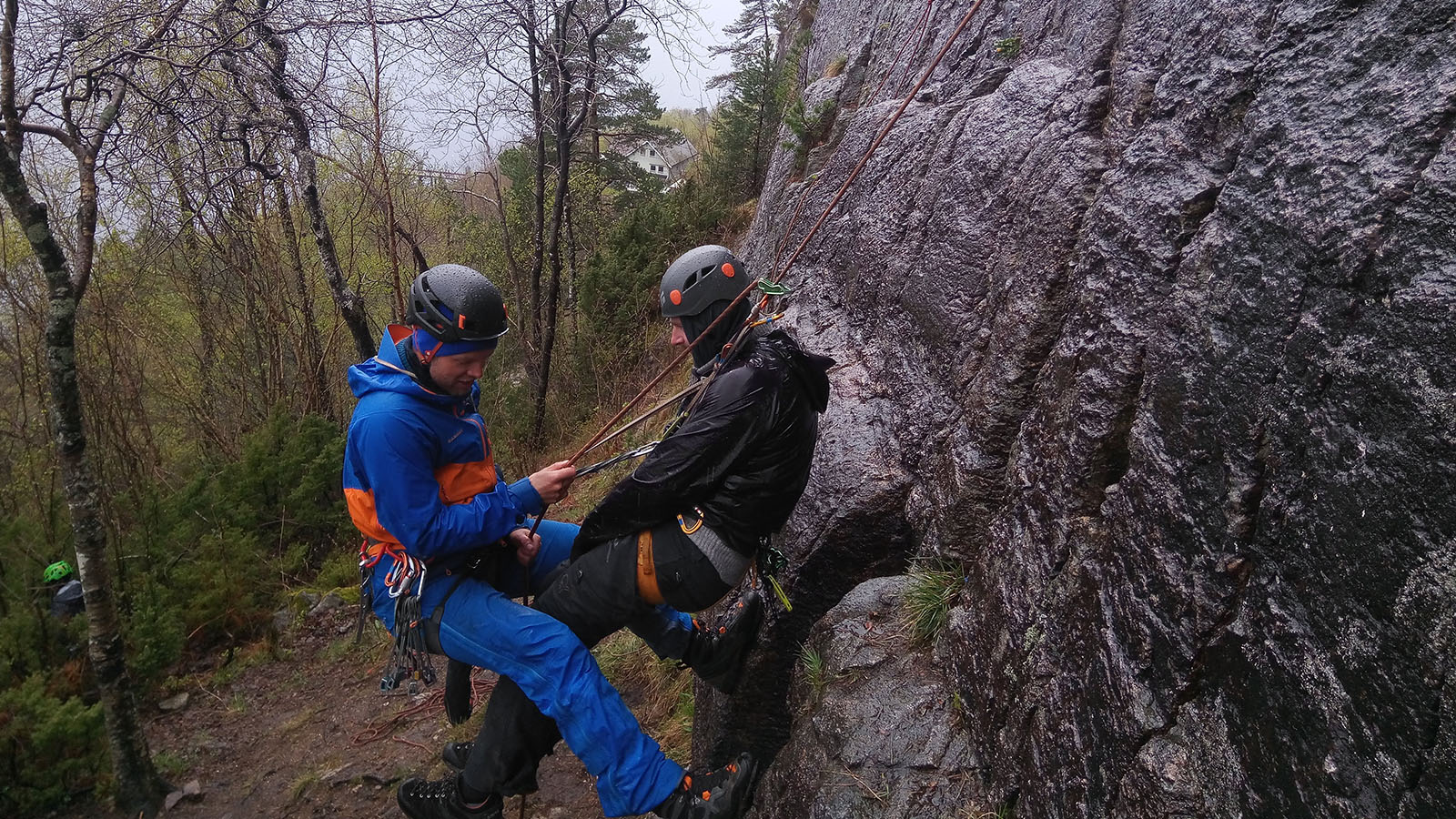
If you want to learn trad climbing, a course is a good starting point. Placing protection that will actually hold a fall and building solid anchors are skills that are best learned with direct feedback from an experienced instructor.
During a trad climbing course you will learn:
- how to place protection
- how to build anchors
- how to lead trad routes
- basic partner rescue
Uteguiden offers several ways to build your skills:
- Trad climbing course – learn to place gear, build anchors and start leading on traditional protection.
- Five-day multipitch climbing course on Sunnmøre – a complete course that takes you from single-pitch skills to longer multipitch routes.
- Indoor to outdoor climbing course – for climbers who know the gym and want to move safely onto real rock.
- Partner rescue course – practise self-rescue and helping a partner on multipitch terrain.
👉 Learn more about our multipitch climbing course on Sunnmøre.
Guided classic climbs
Not everyone wants to lead. If your goal is to experience a classic summit or ridge, a certified guide can lead the route while you climb as second. These are some of the guided climbs we offer in the region:
- Romsdalshorn – one of the most iconic peaks in Romsdalen, above Åndalsnes.
- Jønshorn traverse – a ridge adventure in the Sunnmøre Alps above Hjørundfjorden.
- Bladet – a guided classic climb for those who want an airy, memorable day on rock.
- Climbing at Fjøra – climbing close to the fjord, well suited as an introduction to rock.
- Scrambling Store Brekketind – an exposed scramble for hikers who want to try more technical terrain.
Want a day tailored to your experience, goals and dates? Book a private climbing guide. Your guide chooses the route based on conditions and your level, which makes it a good option for both beginners and experienced climbers who want local knowledge. See all options on our climbing page.
Climbing safely on your own
If you plan to climb independently, a few local tips:
- Use an up-to-date guidebook and check descent routes before you start.
- Start early and set a turnaround time. Weather can change fast along the coast.
- Expect loose rock on ridges and in gullies, and wear a helmet.
- Tell someone where you are going and when you expect to be back. Mobile coverage can be limited in the mountains.
- Choose routes below your limit when you are new to the rock type and grading.
Rainy day? Try bouldering in Stranda
When the weather shuts down the mountains, Stranda Bouldering Centre is a good place to keep training. Stranda is also our home base, with easy access to the Sunnmøre Alps. Between climbing days you can also explore the fjords; see our overview of fjord tours from Ålesund.
Planning a whole active week? Have a look at our adventure weeks, or contact us at travel@uteguiden.com or +47 40 55 46 70 and we will help you put together the right climbing trip.
Frequently asked questions
What is trad climbing?
Trad (traditional) climbing means the leader places their own removable protection, such as nuts, cams and slings, while climbing. The second climber removes the gear. Most mountain routes on Sunnmøre are climbed this way rather than on bolts.
Is Sunnmøre good for multipitch climbing?
Yes. The Sunnmøre Alps and nearby Romsdalen offer everything from short multipitch crag routes to long ridges and classic alpine peaks, often with fjord views. The rock is mainly gneiss, which suits traditional protection.
When is the best time for trad climbing on Sunnmøre?
The main rock climbing season is summer, when approaches are free of snow and the rock is dry. Lower crags usually come into condition earlier than high alpine routes. Always check the forecast, as weather changes quickly in Western Norway.
Can beginners try trad or multipitch climbing?
Yes, with a guide. On a guided climb or with a private climbing guide, the guide leads and you climb as second. If you want to lead yourself, start with a trad climbing course or our indoor to outdoor course.
What skills do I need to climb multipitch routes on my own?
You should be able to place reliable protection, build anchors, belay from above, manage the rope, rappel safely, plan the route and descent, and perform basic partner rescue. A multipitch course and a partner rescue course cover these skills.
What gear do I need for trad climbing?
A typical rack includes nuts, cams in common sizes, slings, alpine draws and locking carabiners, plus a harness, helmet, a belay device that works from above and layers for changing weather. On guided trips your guide will tell you what to bring.
Can I hire a private climbing guide on Sunnmøre?
Yes. Uteguiden offers private climbing guiding where the route is chosen based on your experience, goals and conditions on the day. Contact travel@uteguiden.com or +47 40 55 46 70.
What can I do on a rainy day?
Stranda Bouldering Centre is a good indoor option. You can also try other activities in the region, such as fjord trips from Ålesund.