Some trips start with someone else's plan. This one started with our own. We’ve worked with this crew before—a Haglöfs ski-and-sail trip, a National Geographic feature back in 2017—so when the conversation with a Swedish/American team connected to Technica and Blizzard turned to what we could do together next, we already knew we didn't want another standard photo shoot. We wanted to do something that hadn't been done before. So we pitched them a new route: four days of skiing between two fjords that most people only see from the deck of a cruise ship—Tafjord and Geiranger. Not a ski resort. Not a cat-skiing run. A traverse no one had actually completed from end to end. We called it the Geiranger Haute Route, and they were in.
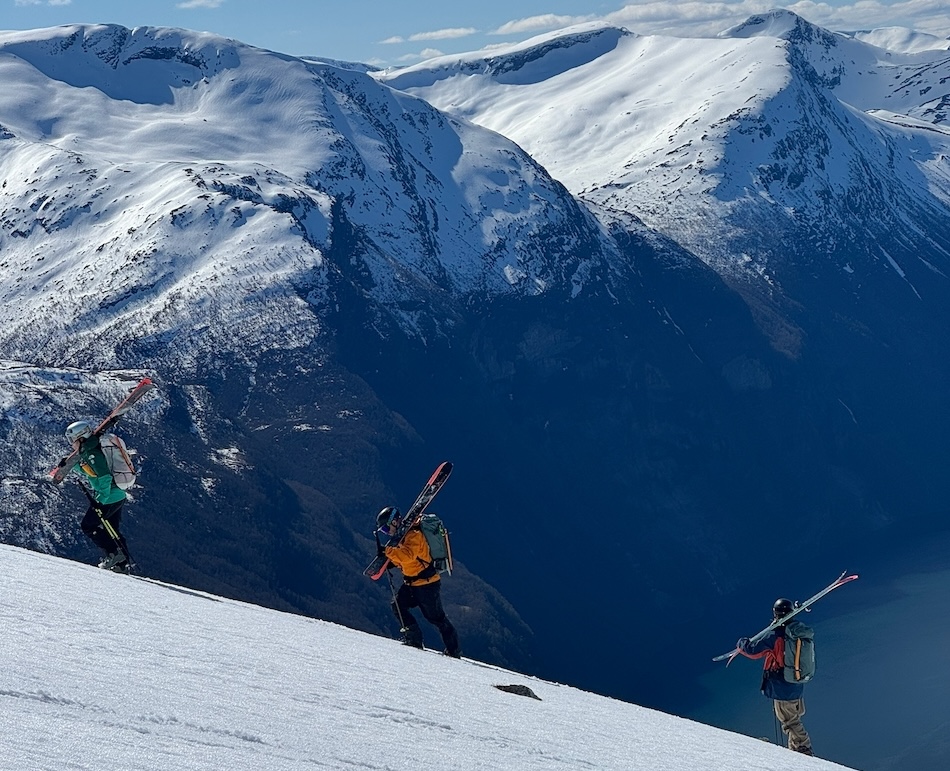
Three Scandinavians and four Americans met in a gravel parking lot at the end of the road in Tafjord. On paper, it looked simple enough: about 80 kilometers, just over 5,900 meters of elevation gain, four huts, no lifts. In practice, it was a real mixed bag—storms on the peaks, properly wet bogs lower down, some brush to fight through at the start, hard wind-packed snow where we’d hoped for powder—and somewhere between all of that, some of the coolest and most rewarding ski terrain in Sunnmøre.
The Route
Day 1 — Zakariasvatnet to Reindalseter.
17.7 km, 1,311 m elevation gain, 1,057 m descent. Once the overnight packs were dropped, those who still had legs left put in an extra lap up the western ridge of Naushornet and back—about 300 extra meters of climbing, just because it was there.
Day 2 — Reindalseter to Danskehytta.
The big one: 19.2 km and over 2,200 meters of elevation gain, a mountain pass crossed in a full-blown storm, and a genuinely relieved arrival at a small hut in the middle of nowhere.
Day 3 — Danskehytta to Kaldhusseter.
18.5 km through more sheltered terrain, and our first chance to dry out a bit.
Day 4 — Kaldhusseter to Geiranger.
The longest stage—just over 25 km—which ended with the fjord opening up beneath us.
How it works in practice
We used DNT’s self-service huts the whole way: bring a thin travel sheet, and you can buy food and snacks on-site via Vipps or the DNT app. A thermos for a proper hot lunch is worth its weight in gold. Beyond standard backcountry gear, we brought standard avalanche equipment, ski crampons, an ice axe, and basic glacier/mountaineering gear with ropes in the group for the sections that required it. You need a car shuttle at both ends of the route.
What we remember best
The group was skilled enough, and hungry enough, that the toughest days felt worth it—including a descent we’re still talking about, where the real question wasn't whether the line would go, but who would drop in first. We’ll leave the names of the ridges out of it and just say this: Sunnmøre held its own against everything the Americans had skied back home.
When we finally checked into Hotel Union in Geiranger, with the fjord lying beneath the spa windows, no one was in a hurry to think about everyday life again. A bonus day around Geiranger the next day is optional—but we recommend it every time.
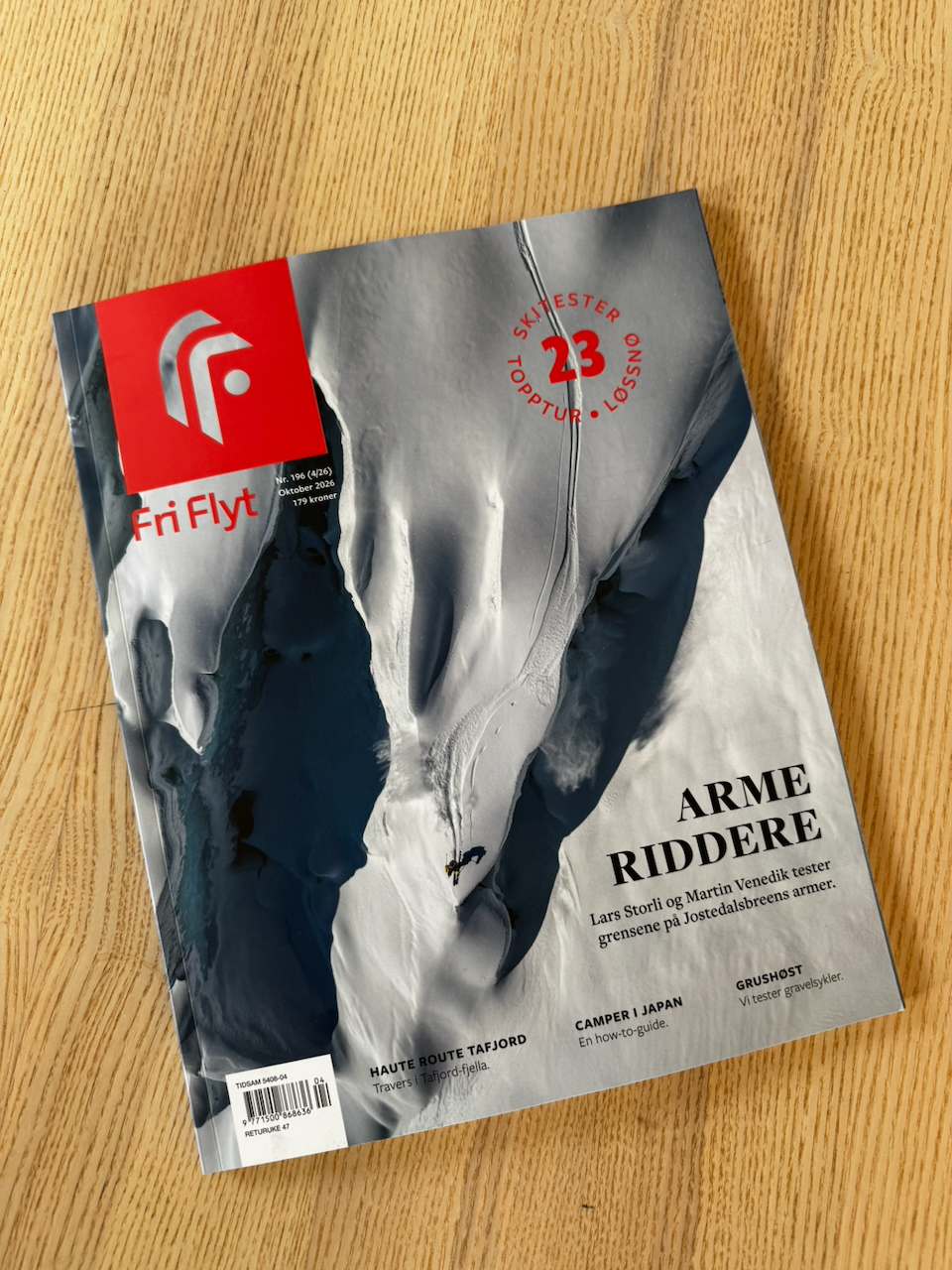
This specific traverse is now featured in Fri Flyt (Norway’s largest backcountry magazine, October 2026 issue)—worth a read if you want the full story, storm included, along with Cameron McLeod’s photos from all four days.
Johan and the crew are already talking about coming back next winter for a new line. Take that as a five-star review, if you need one.
Want to do the same?
We don't run this as a scheduled departure—it's demanding enough that it requires the right group. However, we are happy to arrange it as a private booking for strong teams who want a real challenge and can handle four solid days of skiing, regardless of the weather. If that sounds like your crew, get in touch and we’ll go over what it takes.