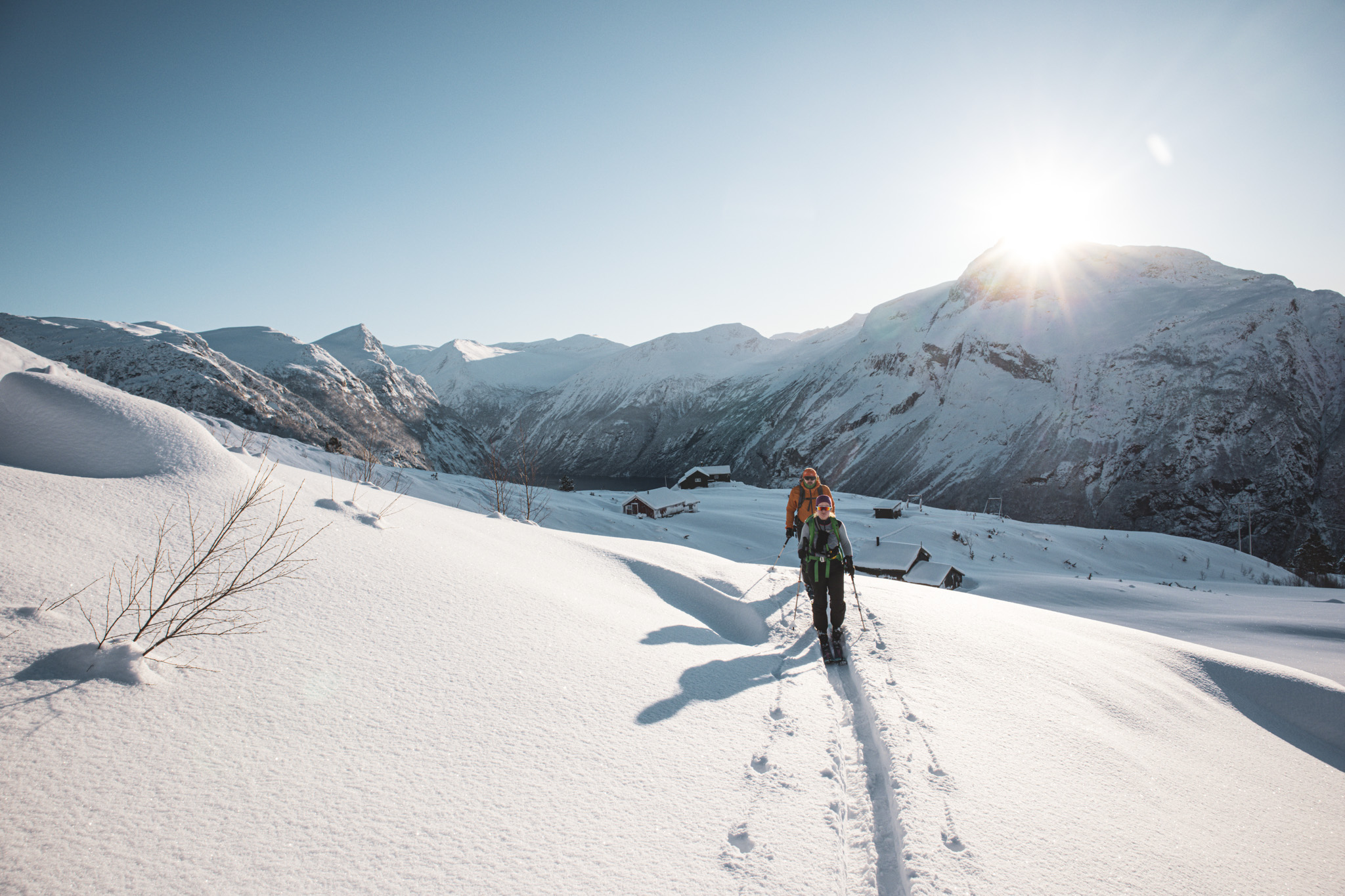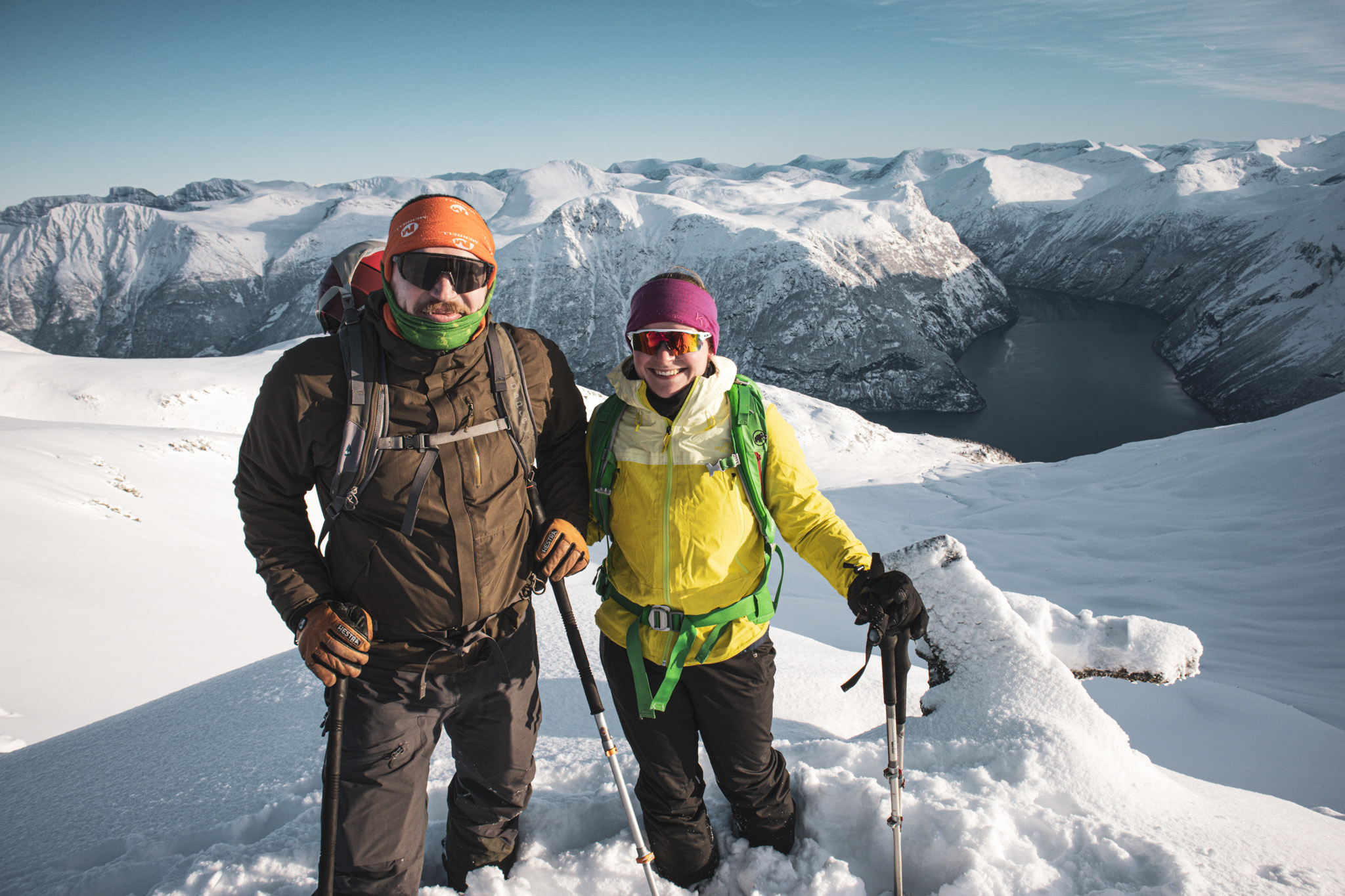
You don't need to be an expert to try ski touring in Sunnmøre, Norway. You need to ski confidently on varied resort terrain, have a decent base fitness level, and go with a certified guide who assesses the snow, weather and avalanche danger for you. The guide picks the tour based on conditions and the group, and teaches you skins, kick turns and safe travel along the way. You learn the rest on the tour.
What is ski touring, and why Sunnmøre?
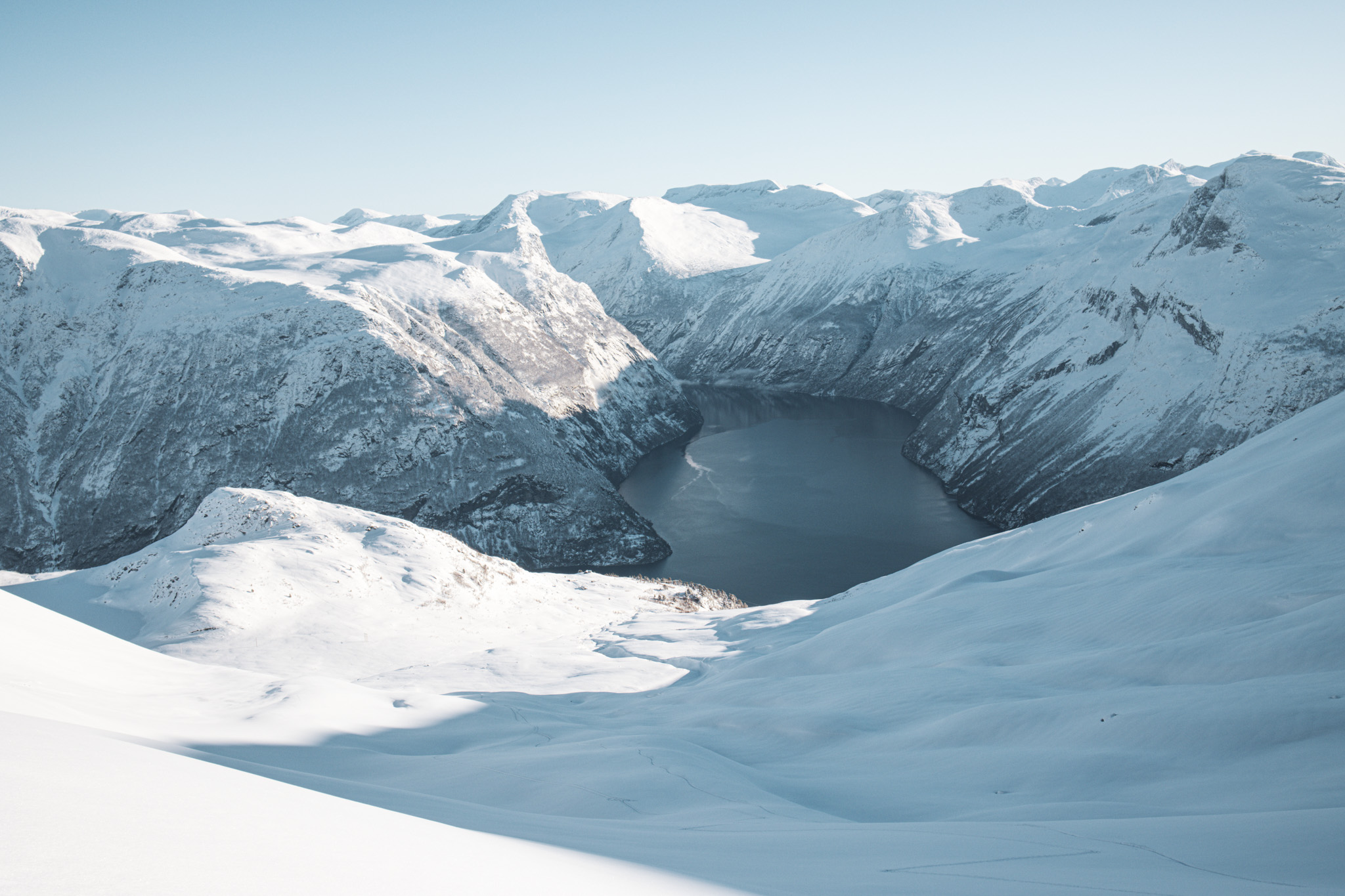
Ski touring (also called backcountry skiing or alpine touring) means you climb uphill on skis with climbing skins attached underneath, then ski down through untracked terrain. The Sunnmøre Alps in Western Norway, within driving distance of Ålesund, are famous for mountains that rise straight out of the fjord. You can start close to sea level and finish your descent with a view over the fjord. That makes for long, varied tours and plenty of options when wind and snow conditions change.
For a beginner, that variety is exactly why you should go with a guide. The terrain is steep and beautiful, but it takes someone who can read the snow, choose safe lines and turn back in time. Uteguiden is based in Stranda and has been guiding in these mountains since 2012. If you want a ready-made package, take a look at the Ski Touring Weekend in Sunnmøre or the longer Ski Touring Week in the Sunnmøre Alps.
What you need to know before your first ski tour
Skiing ability
What usually determines how much you get out of the tour is how you ski down, not how you go up. A good rule of thumb:
- You can ski in control down most red runs at a ski resort (roughly intermediate level).
- You can turn and stop whenever you want, even on slightly uneven snow.
- You have tried skiing off-piste, or you are ready to learn.
You don't need to ski deep powder gracefully. The guide adapts the pace and terrain, and many people learn a lot about off-piste technique on their first tour. If you want to build your skills first, a ski course or a basic ski touring course in Stranda is a good place to start.
Fitness and endurance
A ski tour involves several hours of steady uphill walking, with breaks along the way. If you have mountain fitness, for example from summer hiking, cross-country skiing or running, that is enough for an adapted beginner tour. The key is to keep a steady pace you can hold for a long time, not to go fast.
What you learn on the tour
You don't need to know these things beforehand. A good guide will teach you along the way:
- Putting skins on and taking them off quickly, even in wind.
- Using the heel risers on your bindings on steep sections.
- Zig-zagging uphill and doing kick turns in steep terrain.
- Switching from walk mode to ski mode at the top.
- Keeping your distance in exposed terrain and following the guide's instructions.
Safety in ski touring: the most important things to know
Ski touring comes with several kinds of risk, and that is an important reason beginners should go with a guide. The most common problems are falls and injuries, such as twisted knees, fractures or hitting rocks and trees on the descent. Other hazards include hard or icy snow, steep terrain, cold, poor visibility and fatigue. Avalanches happen less often, but when they do, the consequences are often very serious. That is why avalanches call for specific knowledge and equipment.
Avalanches
Varsom.no is Norway’s official avalanche warning service. It publishes forecasts with a danger level from 1 to 5 for different regions. The danger level is only one of several factors in the assessment. The guide also looks at slope angle, wind-transported snow, temperature and how the snowpack has developed through the winter.
As a participant, you must carry and know how to use three items:
- Avalanche transceiver (beacon): Switched on at the start and checked before the tour.
- Shovel: Used to dig out a buried person.
- Probe: Used to pinpoint exactly where the person is buried.
On guided tours you usually go through a short companion rescue drill before setting off.