If you have little or no avalanche training, choose a basic avalanche course. An NF basic course is a basic course that follows the common national standard of Norsk Fjellsportforum (the Norwegian Mountain Sports Forum). If you have already done a basic course and have a few seasons of ski touring or freeriding behind you, an advanced avalanche course is the next step. Unsure? Start with the basic course. It is never wasted.
In short: three levels, one goal
Every avalanche course shares the same goal: helping you make better decisions in avalanche terrain and enabling you to help your partners if something goes wrong. The difference between the courses comes down to how much experience you already have and how independently you want to travel in the mountains. Here is a simple rule of thumb:
- Basic avalanche course: for those new to ski touring or off-piste freeriding, or who have been going out for a while without formal training.
- NF basic avalanche course: a basic course built on the common standard and curriculum of Norsk Fjellsportforum (NF), the Norwegian Mountain Sports Forum. A good fit if you want a course with nationally recognised content.
- Advanced avalanche course: for those who have a basic course and several seasons of their own experience, and who want to plan and lead trips independently.
Basic avalanche course: what you learn
The basic course is the foundation. The aim is for you to understand why avalanches release, recognise dangerous terrain and know what to do if someone in your group is caught. Typical content includes:
- The avalanche forecast: how to read the forecast on Varsom (Norway's official avalanche warning service), what danger levels 1 to 5 mean, and how avalanche problems are described.
- Terrain: slope angle, terrain traps, runout zones and why around 30 degrees is an important threshold to know.
- Trip planning: how to use maps and slope-angle maps to choose a route before you leave the house.
- Field observations: warning signs such as recent avalanches, whumpfing sounds and shooting cracks, and how wind and weather change conditions.
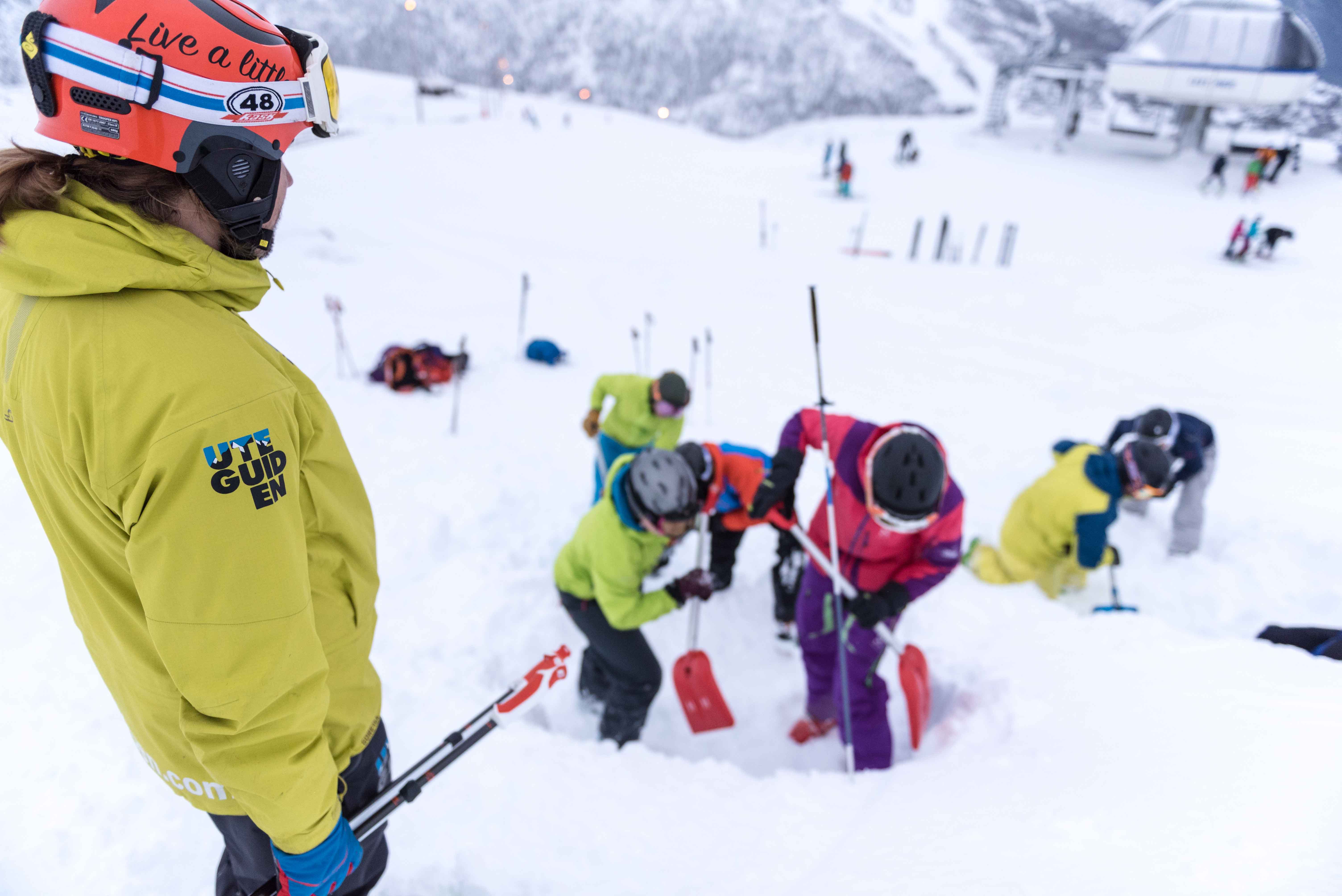
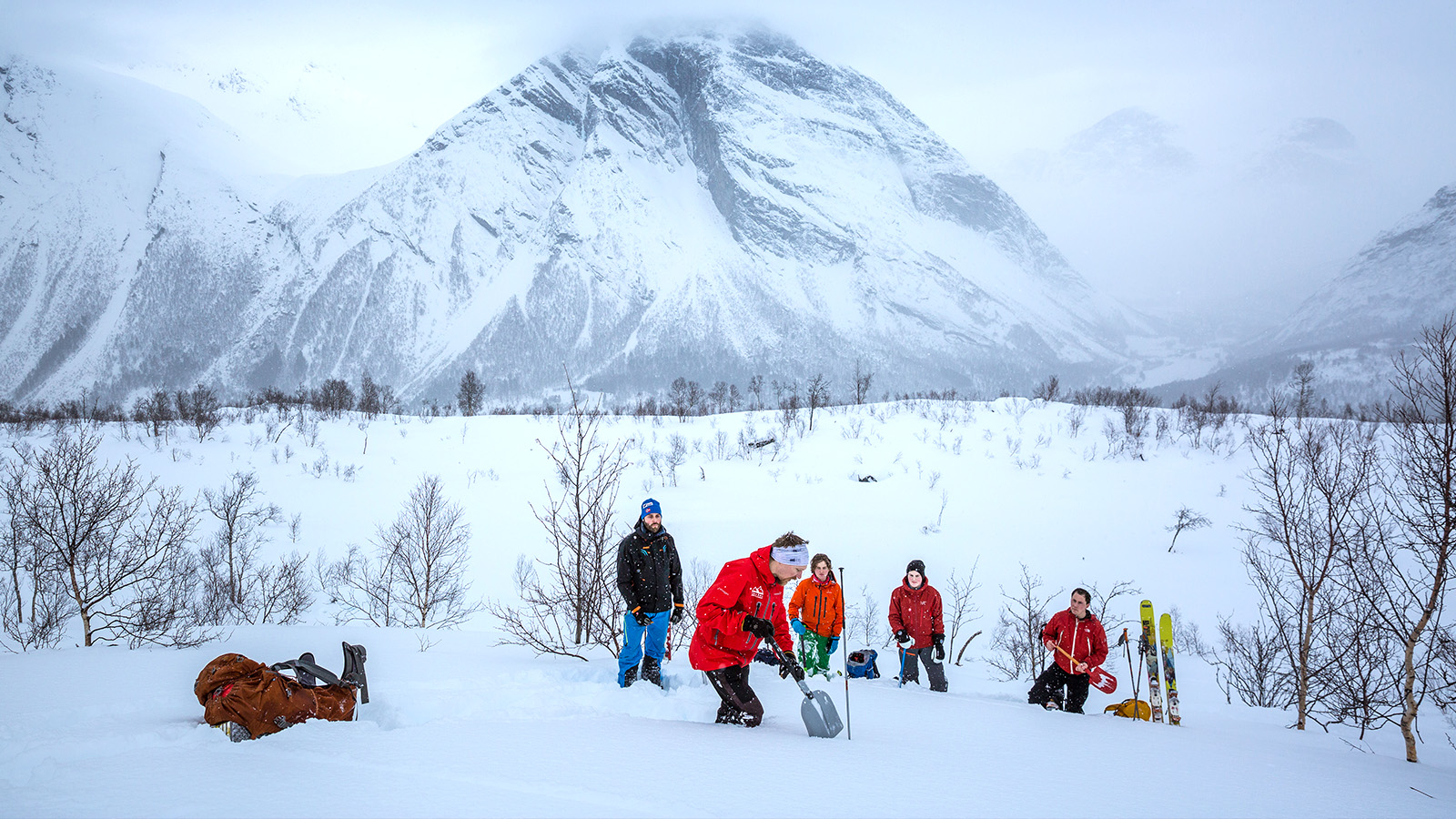
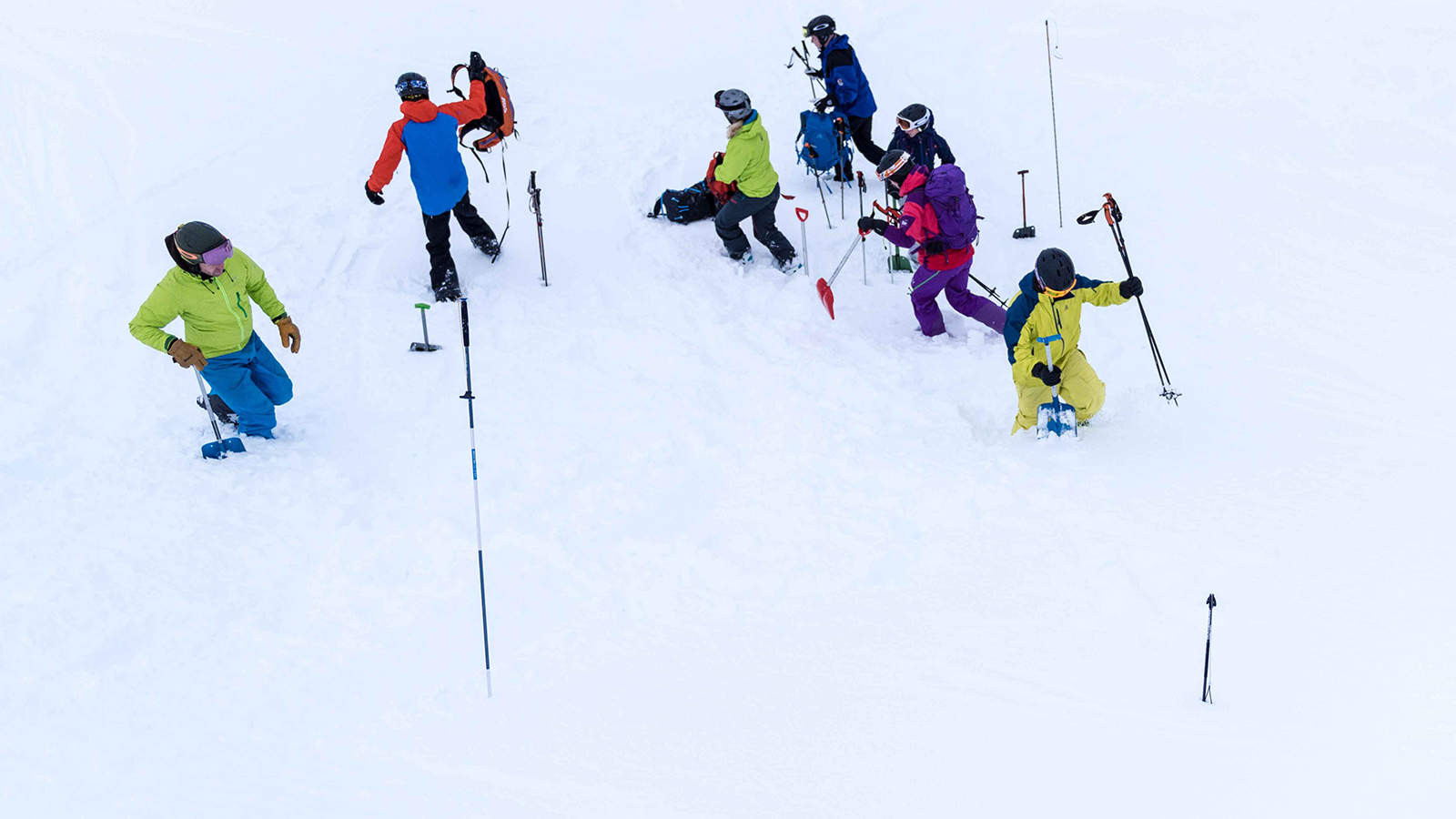
- Companion rescue: searching with a transceiver, probing and efficient shovelling. This is practised hands-on in the snow.
A basic course will not make you an expert, but it gives you a shared language with your partners and a system for making decisions. Many people find it is only after the course that they understand what they are actually looking at when they stand on a summit.
Basic avalanche course or NF basic course?
Both are basic courses. An NF course follows Norsk Fjellsportforum's common standard, which is an advantage if you want content that is the same from one provider to the next. Other basic courses may cover much of the same material, but the setup can vary. So always read the course description and check what is included in terms of theory, field days and rescue drills. We offer both NF-standard basic courses and a basic avalanche course in Stranda. See all options in our avalanche course overview.
Advanced avalanche course: when are you ready?
An advanced avalanche course builds on the basic course. It suits people who already spend a lot of time touring and want to make more independent decisions in complex terrain. The course usually requires that you have completed a basic course and have a few seasons of your own experience. Typical topics include:
- Snowpack structure and how weak layers form and develop through the season
- Snow profiles and stability tests, and how to interpret them without blindly trusting a single result
- More advanced trip planning and on-the-go assessments
- Group dynamics, communication and human factors in decision-making
- Companion rescue with multiple burials and more realistic scenarios
A good sign you are ready: you read the avalanche forecast without thinking about it, you have helped plan several trips, and you feel you are missing tools to assess conditions that do not fit the textbook. Then an advanced avalanche course in Stranda is a natural next step.
How to choose the right course: five questions
- Have you taken an avalanche course before? No: choose a basic course. Yes, but a long time ago: a new basic course can be a smart refresher.
- How much have you toured on your own? If you have little experience after your basic course, gather more trips before going advanced.
- Is it important that the course follows a national standard? Then an NF course is the right choice.
- Do you want to lead others? Then in the long run you will need both the advanced level and plenty of your own experience.
- Is rescue your weak point? A dedicated companion rescue course is an effective way to train exactly that.
Companion rescue: a skill that needs maintaining
Whatever your level, companion rescue is something you need to practise regularly. When someone is caught in an avalanche, the group on site is best placed to help, and time matters a great deal. Many people take a basic course and then rarely practise afterwards. If you want to train specifically on searching, probing and digging, a companion rescue course can be a good supplement to your basic course or a refresher before the season. Find current options in our avalanche courses.
Equipment you need
On most avalanche courses you are expected to bring standard avalanche safety gear: a transceiver (beacon), a probe and a shovel. Many also use an avalanche airbag backpack. If you do not have your own gear, you can rent avalanche equipment from us. Check the course description for what applies to your specific course, and learn to use your own transceiver before the course starts.
Where should you take an avalanche course in Norway?
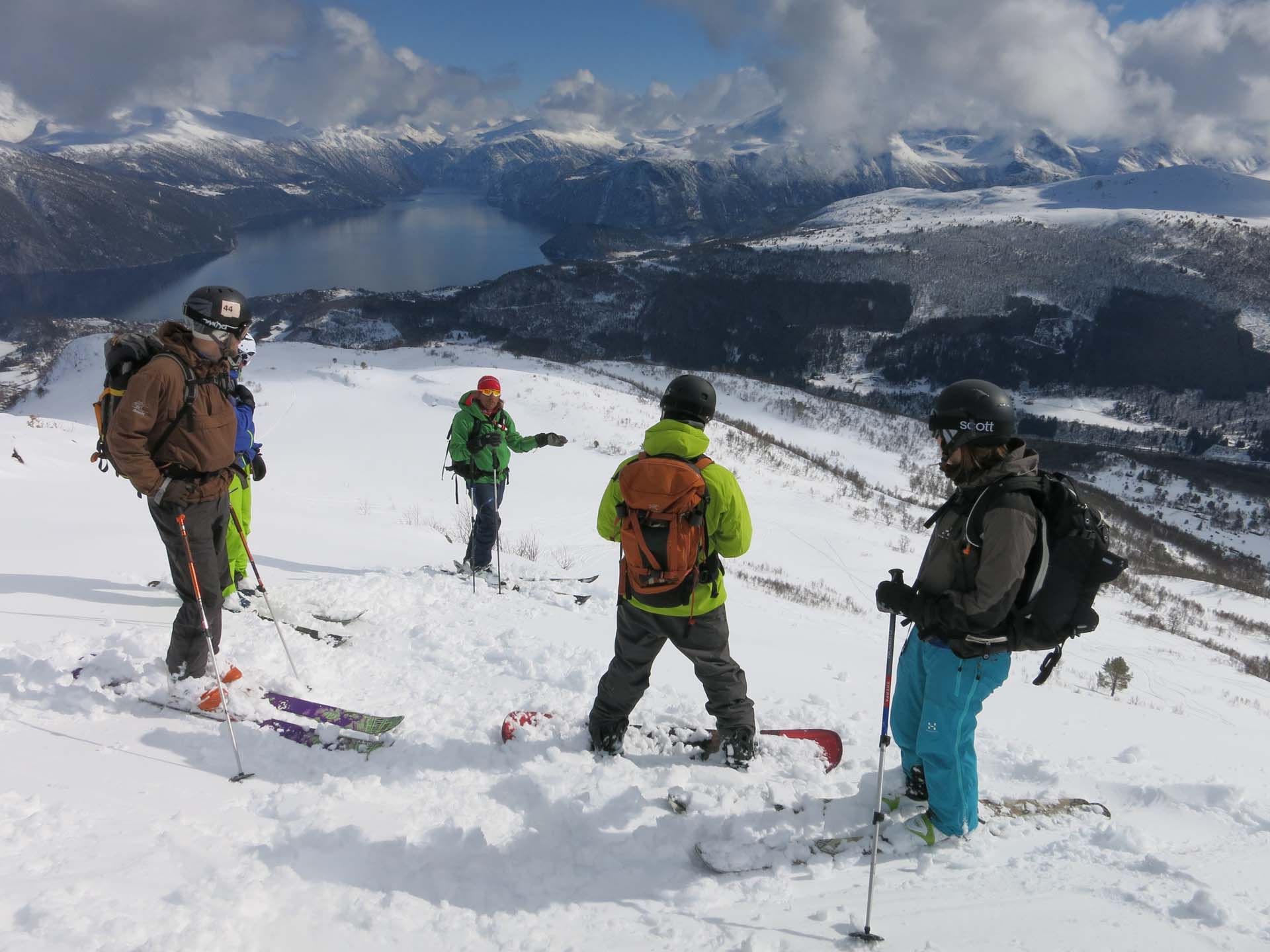
The most important thing is that the course spends enough time out in real terrain with a qualified instructor. We are based in Stranda in Møre og Romsdal, Western Norway, a village known for powder skiing and a strong outdoor culture, and the Sunnmøre Alps offer varied conditions to practise in. We also run avalanche courses elsewhere, including in Romsdal around Åndalsnes (basic avalanche course Åndalsnes), at Bjorli (basic avalanche course Bjorli) and in Hemsedal (basic avalanche course Hemsedal). If you live in Trondheim and are looking for an avalanche course, Romsdal and Bjorli may be good alternatives. See all dates and locations in our avalanche course overview, or explore ski touring with us.
After the course: how to become a better avalanche assessor
- Read the avalanche forecast every time you head out, even when you are not going into steep terrain.
- Submit your own observations to Varsom to train your eye.
- Tour with people more experienced than you, and discuss your choices along the way.
- Practise companion rescue at least once before and once in the middle of the season.
- Be honest when you need to turn back. That is part of the skill.
An avalanche course is the beginning, not the end. The best avalanche knowledge is built over many seasons, with good habits and partners who dare to speak up.
Frequently asked questions
What is the difference between a basic and an advanced avalanche course?
The basic course gives you a fundamental understanding of the avalanche forecast, terrain, warning signs and companion rescue. The advanced course builds on this with snowpack structure, stability tests, advanced trip planning and group leadership, and usually requires a basic course and your own experience.
What does NF avalanche course mean?
NF stands for Norsk Fjellsportforum, the Norwegian Mountain Sports Forum. An NF avalanche course follows NF's common standard and curriculum for avalanche training, so the content is comparable from one provider to the next.
Do I need a basic course before taking an advanced avalanche course?
Usually, yes. Advanced courses assume you already have basic avalanche knowledge and companion rescue skills, and a few seasons of your own touring experience. Always check the prerequisites in the course description.
What equipment do I need for an avalanche course?
Normally a transceiver, probe and shovel, and preferably an avalanche airbag backpack. Avalanche equipment can be rented from Uteguiden if you do not have your own. Check the course description for what applies to your course.
How often should I retake an avalanche course?
There is no fixed rule, but companion rescue should be practised every season. If it has been a long time since your basic course, or you have not toured much, a new basic course or a companion rescue course can be a good refresher.
Are there avalanche courses near Trondheim?
Uteguiden runs avalanche courses in Stranda, in Romsdal around Åndalsnes, at Bjorli and in Hemsedal, among other places. For many people in the Trøndelag region, Romsdal and Bjorli may be good alternatives.