Canyoning means following a river down through a narrow gorge by walking, sliding, jumping, swimming and sometimes abseiling. Coasteering uses the same idea along the coast, with climbing on smooth rock and jumps into the sea. Both are done in a wetsuit and helmet with a guide. In Western Norway you can join a canyoning trip in Valldal from age 8 and try coasteering in Ålesund from age 8.
What is canyoning?
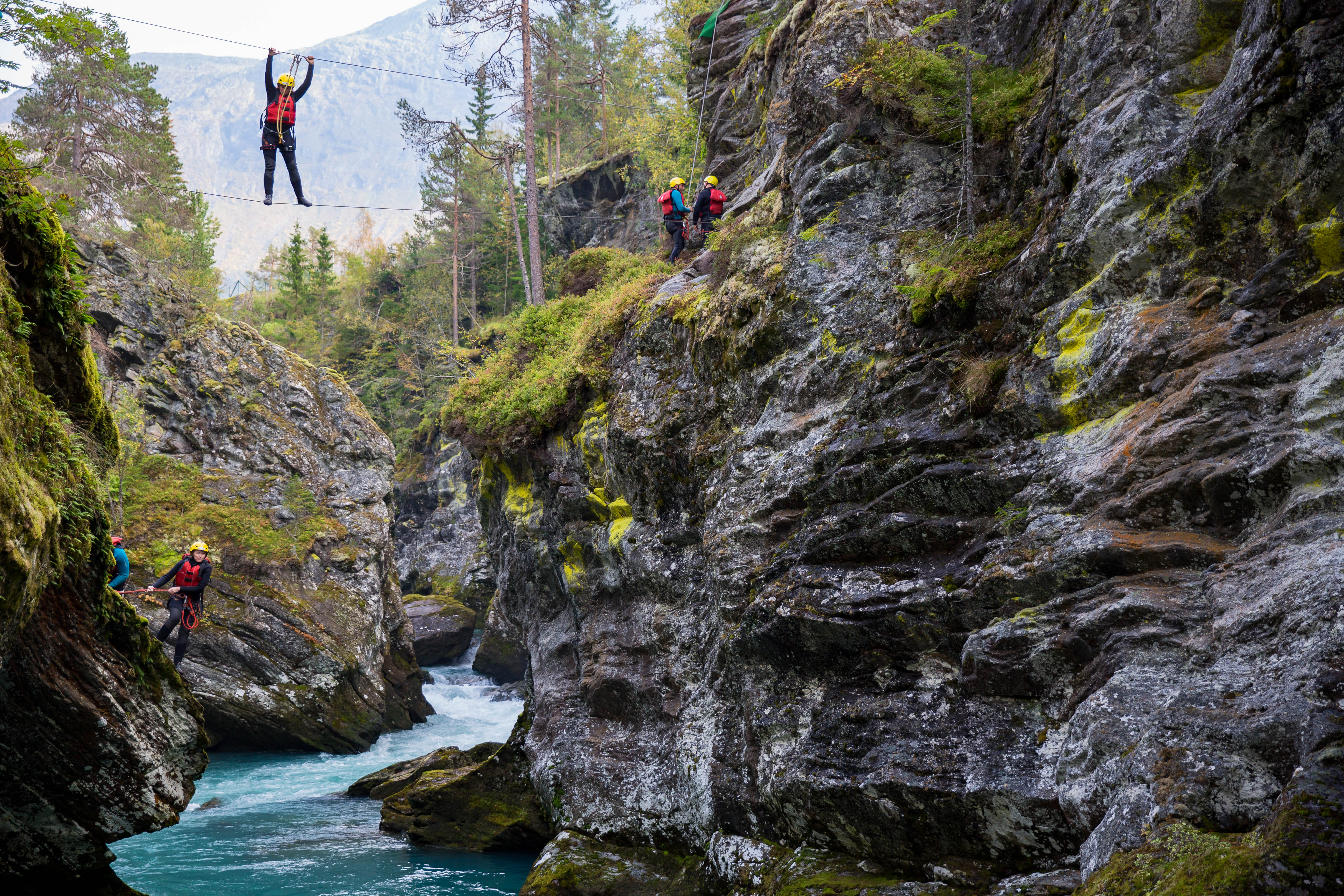
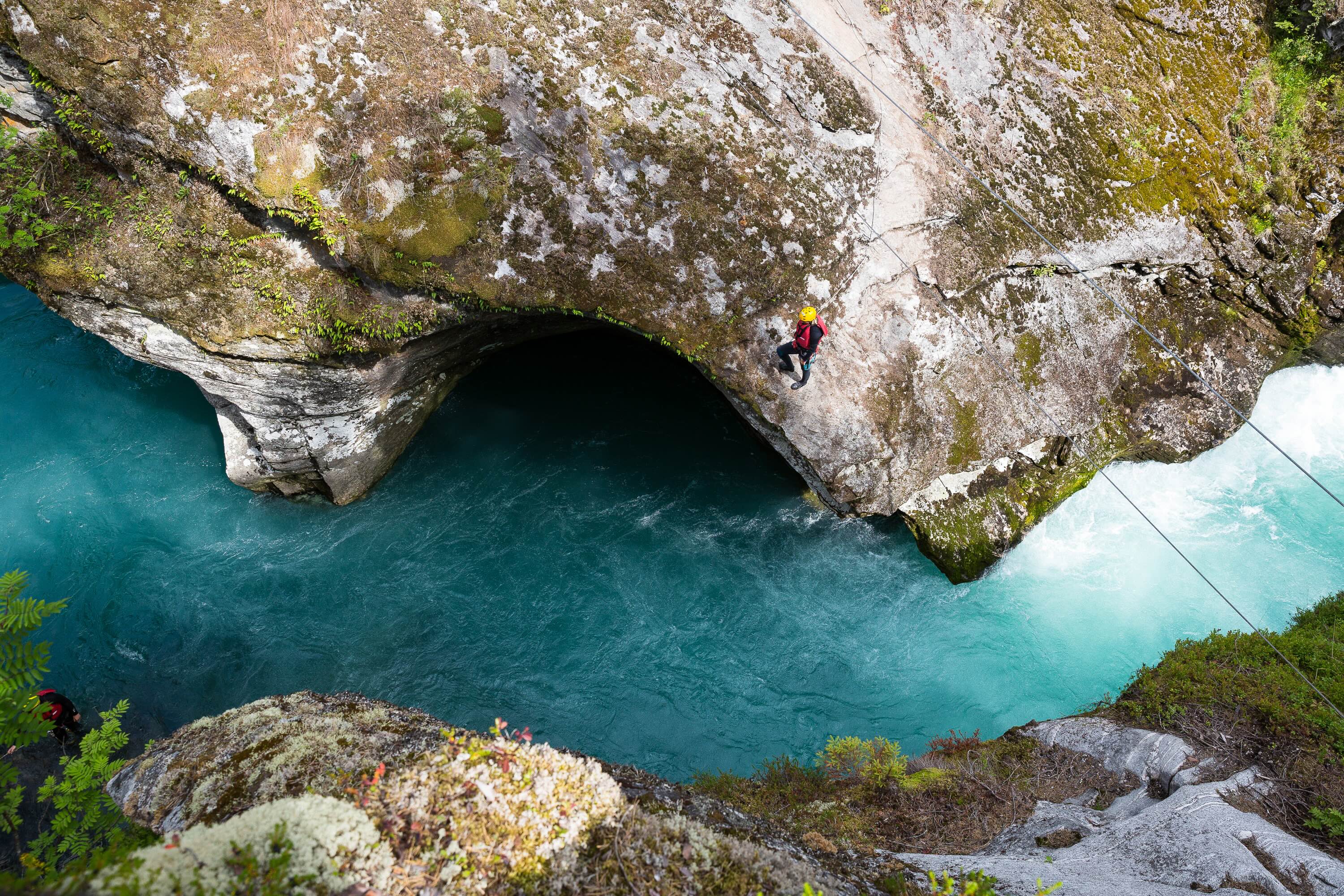
Canyoning means making your way down through a canyon, a narrow gorge the river has carved into the mountain. Instead of walking beside the river, you travel in it. Along the way you slide down smooth rock chutes, jump into pools, swim through narrow passages and scramble over boulders. On some sections you may abseil, which means lowering yourself down on a rope.
It is not a race or a speed activity. The pace is set by the guide and the group, and most jumps and slides have an alternative for anyone who prefers to take it easier. The experience is about seeing the river and the mountains from the inside, in a way you never get from a hiking trail.
Canyoning, canyoneering or juving?
You will see several names and spellings online, including canyoneering, canonying and canioning, but they all describe the same activity. Canyoning comes from the word canyon. In Norway the activity is called juving, from juv, the Norwegian word for gorge, so you may see that word on local signs and websites.
What is coasteering?
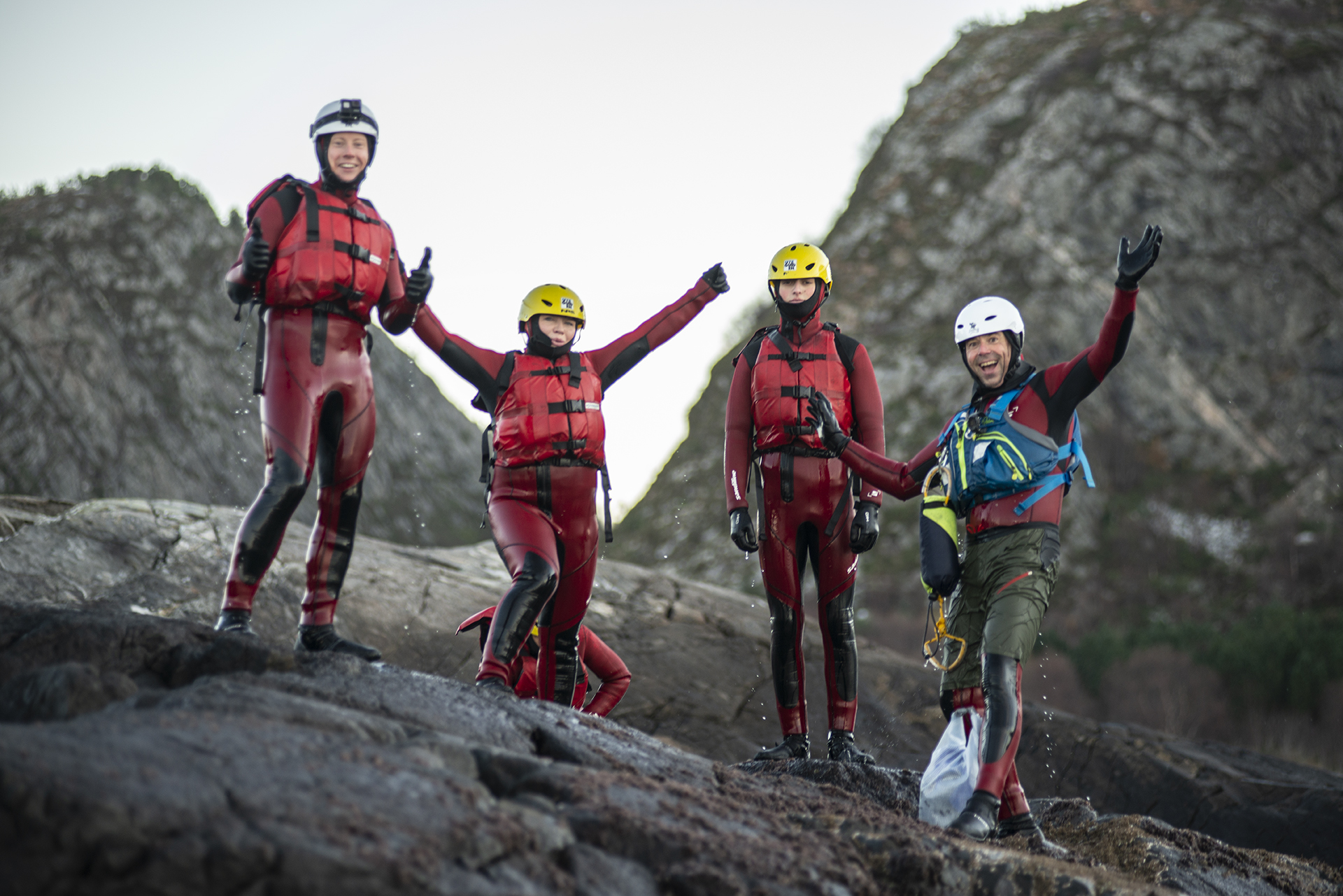
Coasteering is canyoning's cousin by the sea. Instead of following a river, you move along the coastline: you climb on smooth rock slabs, jump from ledges into the sea and swim between skerries and rock walls. The activity depends on tides, waves and weather, and the guide chooses the route based on the conditions on the day.
Canyoning vs coasteering vs rafting
The three activities have a lot in common: you get wet, you wear a helmet and wetsuit, and you are always with a guide. But the experience is quite different:
- Canyoning: You move on foot and in the water through a river gorge. Sliding, jumping, swimming and scrambling. Fresh water, often cold.
- Coasteering: The same mix of climbing, jumping and swimming, but along the coast in salt water.
- Rafting: You sit in a large inflatable boat and paddle down the river with your group while the guide steers. More teamwork in the boat, less climbing and jumping.
If you like the idea of jumping and sliding, canyoning or coasteering is for you. If you would rather experience rapids and speed together in a boat, rafting is a great choice.
Gear: what is provided and what to bring
On canyoning, coasteering and rafting you borrow a wetsuit and helmet. For canyoning and rafting it is a full wetsuit. The wetsuit keeps you warm in cold water, and the helmet protects you against rock.
It is a good idea to bring:
- Swimwear to wear under the wetsuit
- A towel and dry, warm clothes for afterwards
- Wool or fleece if the weather is cold
- Sunscreen if it is sunny
- Something to drink and a snack for after the trip
Leave jewellery, glasses you do not need and loose items behind. If you need glasses, let the guide know in advance.
Age limits and who it suits
You do not need any previous experience to try canyoning or coasteering, but you should be comfortable in water and able to swim. Age limits are safety rules and cannot be overridden:
- Family canyoning: from 8 years
- Classic canyoning: from 13 years
- Coasteering: from 8 years
- Family rafting: from 8 years
- Classic rafting and express rafting: from 15 years
Participants under 18 need written consent from a parent or guardian. If your child is a little too young for the classic version, the family version is a great alternative.
Hen and stag parties, school trips and groups of friends
Canyoning, coasteering and rafting work well for groups because everyone does the same thing at the same time, and there is plenty to laugh about afterwards. For hen and stag parties you can book a private trip so the group has the guide to itself. For school trips, classic canyoning suits students from 13 and the family versions work from 8. Remember parental consent for everyone under 18.
Safety
Canyoning and coasteering take place in nature that changes with weather, water levels and waves. That is why the guide is the most important piece of safety equipment. The guide knows the route, assesses conditions before and during the trip, shows you how to jump and slide safely, and makes the final call on what is safe. Light rain rarely stops a trip, since you will get wet anyway, but if the water level is too high or conditions are poor, the trip may be changed or cancelled. If we cancel, you get a full refund or a new date. Read our safety rules before you go.